

Intro
The Kia Seltos has never needed to prove itself. Since its launch in 2019, it has been one of the most consistent performers in the Indian compact SUV segment. It combined design confidence, feature richness, and reliable engineering at a price that made sense. Buyers responded accordingly.
The 2026 generation, launched in January 2026, does not try to reinvent that formula. Instead, it refines it. Bigger dimensions, a new platform, a more mature cabin, and a substantially upgraded safety and technology package. The changes are not radical. However, they are meaningful.
This review looks at the 2026 Seltos as a daily car, a family car, and a long term ownership vehicle.
Pricing & Variants
The 2026 Seltos is available across eight broad trims: HTE, HTE(O), HTK, HTK(O), HTX, HTX(A), GTX, and GTX(A). An X-Line styling pack is available on the GTX variants for buyers who want the stealth aesthetic.
Three engine options cover the full range.
| Variant Range | Engine | Transmission | Ex-Showroom Price |
| HTE to HTX | 1.5 NA Petrol | 6MT / IVT | Rs. 10.99 to 15.49 lakh |
| HTK to GTX(A) | 1.5 Turbo Petrol | 6iMT / 7DCT | Rs. 12.89 to 19.99 lakh |
| HTK to GTX(A) | 1.5 Diesel | 6MT / 6AT | Rs. 12.59 to 19.49 lakh |
| X-Line | 1.5 Turbo Petrol | 7DCT | Rs. 19.49 to 19.99 lakh |
The full price range runs from Rs. 10.99 lakh at the base up to Rs. 20.19 lakh for the top spec automatic. That is a wide spread, and Kia has structured it carefully to catch buyers at almost every budget point in the segment.
Dimensions
| Parameter | Measurement |
| Length | 4,460 mm |
| Width | 1,830 mm |
| Height | 1,645 mm |
| Wheelbase | 2,690 mm |
| Boot Space | 447 litres |
| Ground Clearance | 200 mm |
The Seltos is now 95 mm longer and has an 80 mm longer wheelbase than before. In person, you feel that growth in how planted the car looks on the road.
Exterior Design
Overall Character
The 2026 Seltos does not shout. It presents itself with a quiet confidence that suits the car’s personality well.
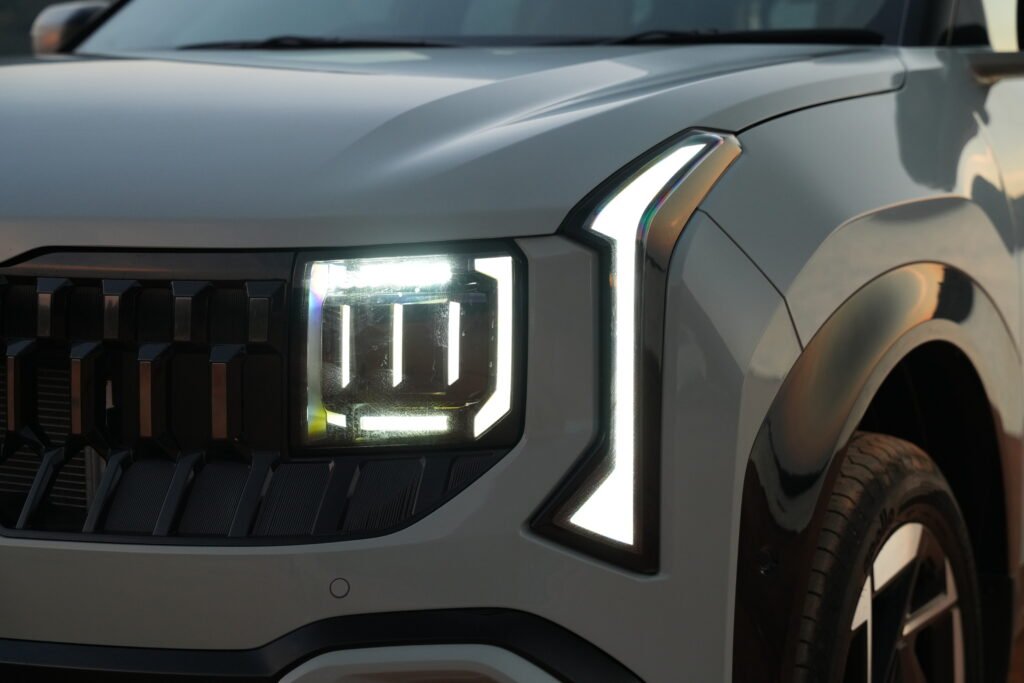
The design draws clear inspiration from Kia’s global EV9 flagship. The A-pillar rake, the floating roof effect created by the C-pillar glass, and the flush door handles that motorise on approach all carry that family reference without feeling derivative.
Front and Side
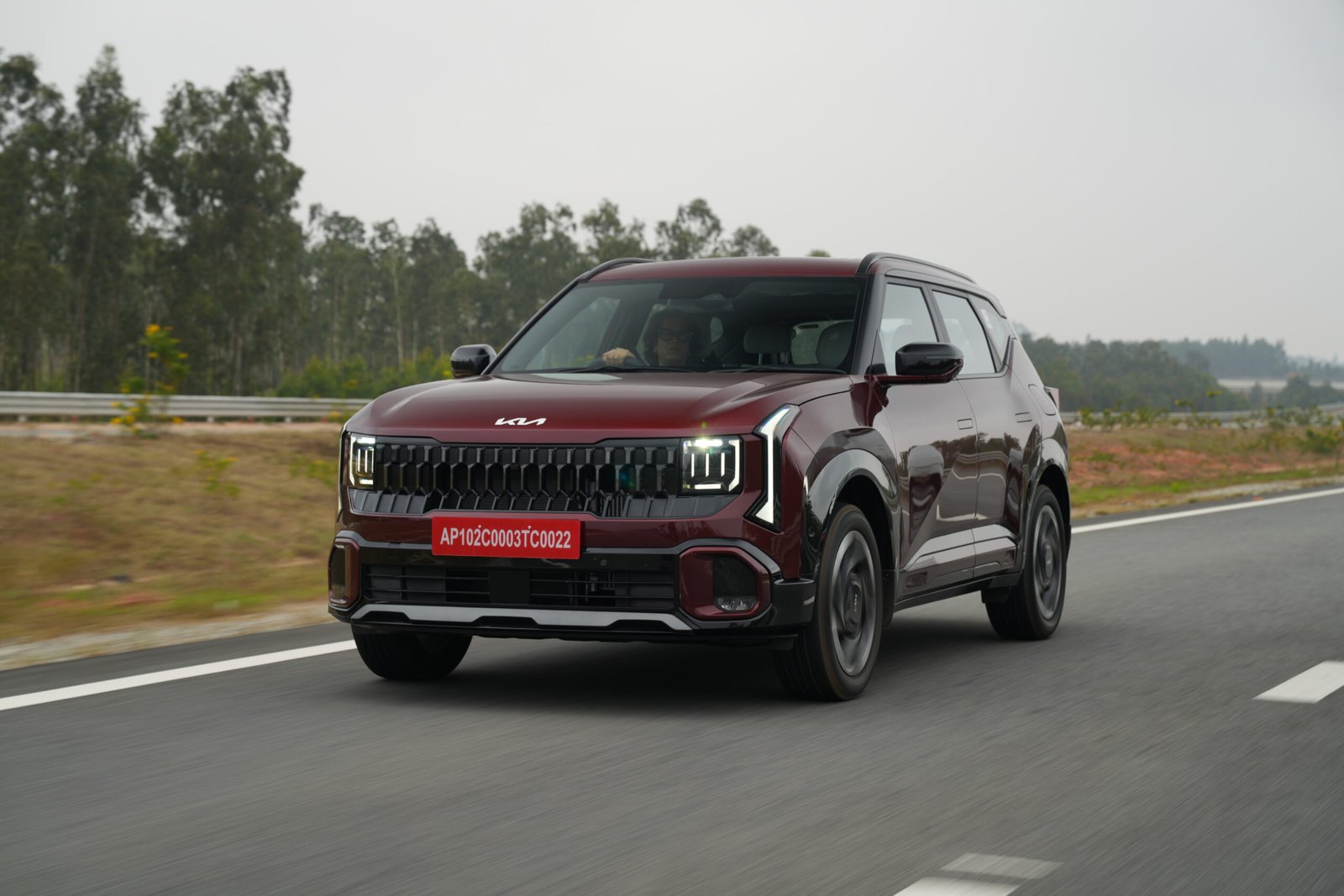
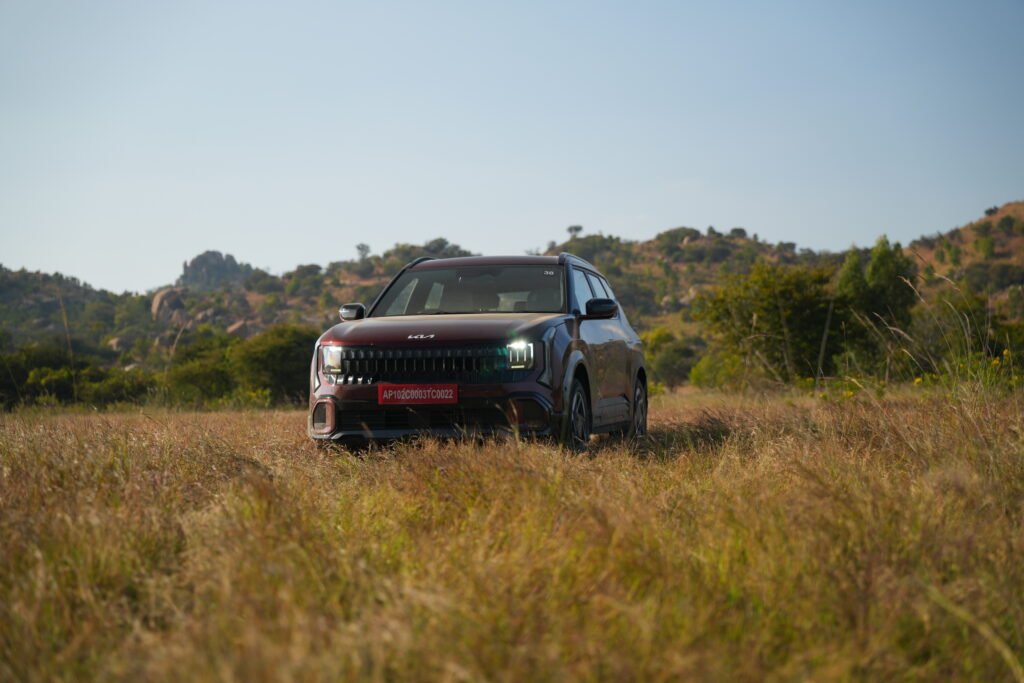
The front carries a large rectangular grille with a bold mesh pattern. LED projector headlamps sit at the inner edges of the grille with a welcome and goodbye animation. The bumper is chunky and finished in gloss black, which does add visual presence. However, gloss black in Indian city conditions is a scratch and swirl magnet. A PPF investment on the bumper is worth considering at delivery.
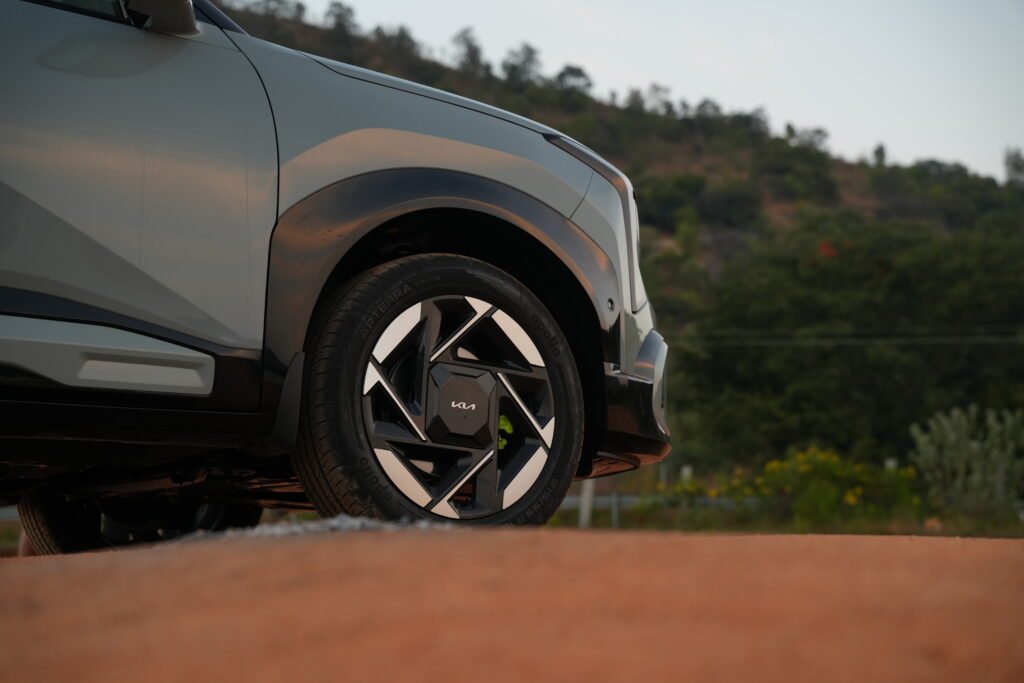
The side profile is the most improved element in the new generation. The boxier stance and more upright surfaces give the Seltos a proper SUV identity. That said, the 18 inch crystal cut alloys on higher variants look well proportioned against the longer body.
Rear
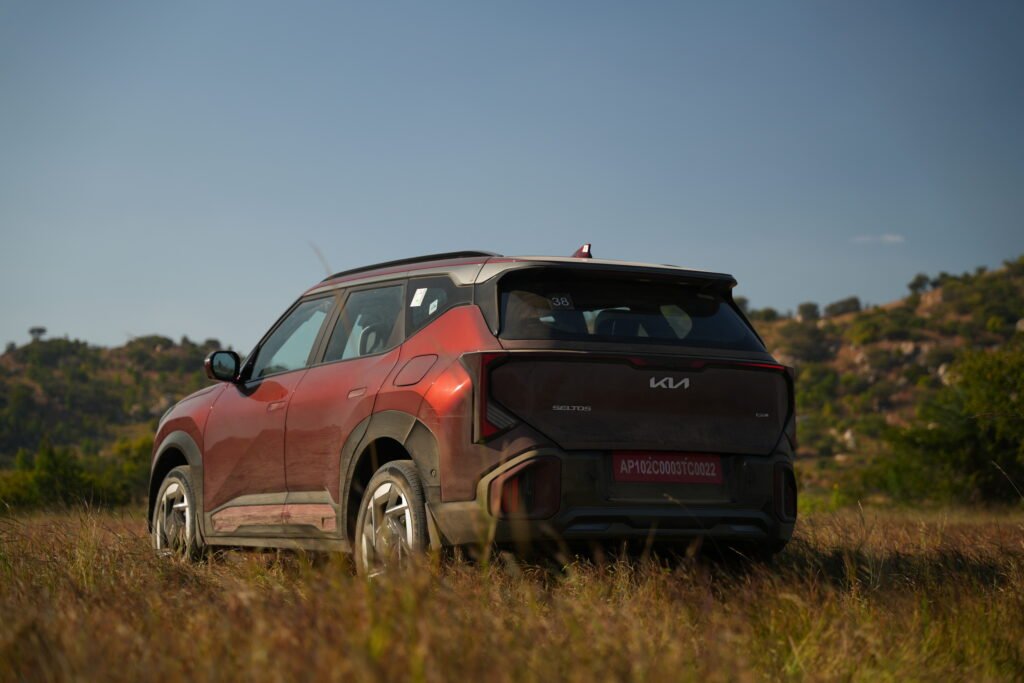
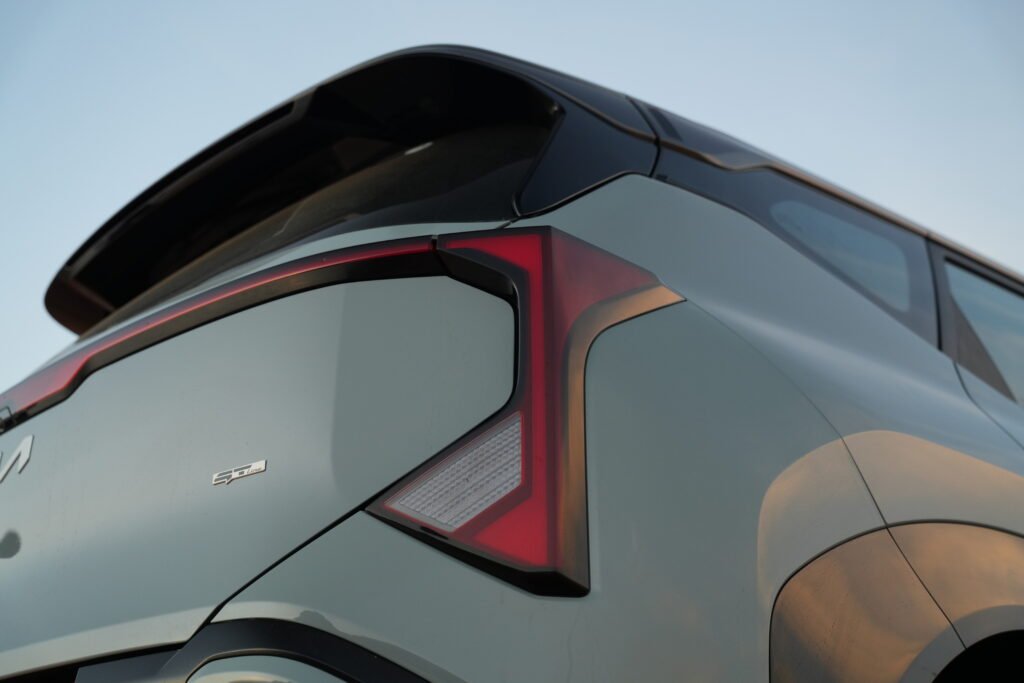
The Star Map LED connected tail lamps are the rear design highlight. They give the Seltos a distinctive and recognisable light signature that is genuinely premium. The overall rear reads as global and well resolved.
Eight colour options are available, including the exclusive Matte Graphite on the X-Line. The X-Line also adds gloss black accents and blacked out alloy wheels. For buyers who want the stealth look, it is the most distinctive version of the Seltos on sale.
Design Signature
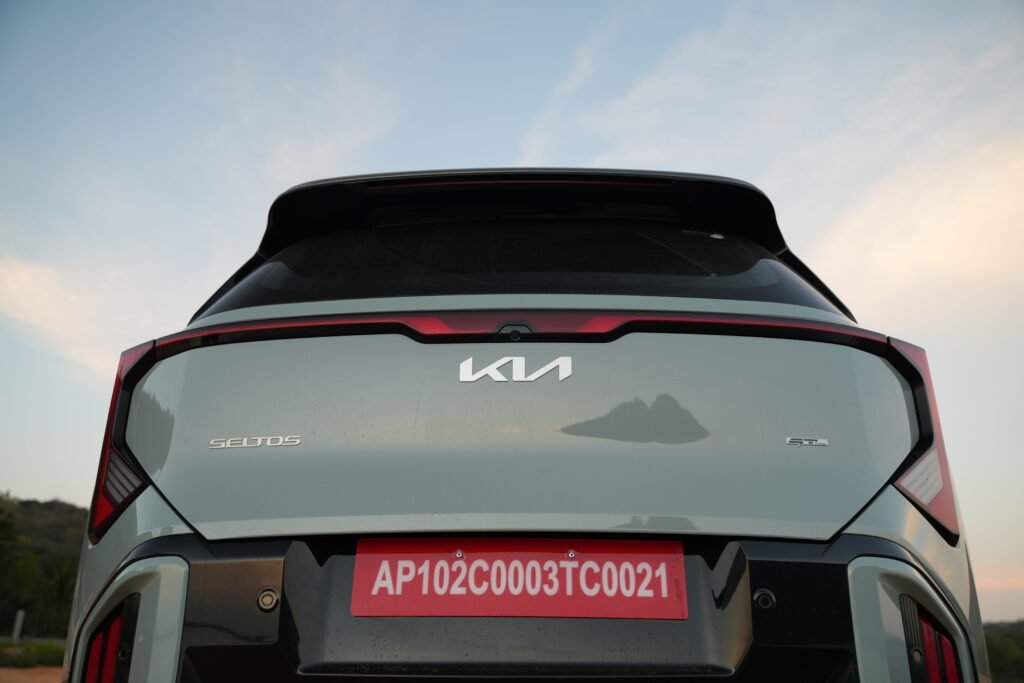
The most distinctive element on the 2026 Seltos is the Star Map LED connected tail lamp. The graphic runs in a continuous pattern across the rear, creating a light signature that is instantly recognisable at night. Most cars in this segment use separated lamp clusters. The Seltos uses a connected light bar as a design statement rather than just a functional element. It is the detail that makes the Seltos’s rear face memorable, and it is what you will notice every time the car is parked ahead of you in traffic.
Interior & Cabin
First Impression
Step inside and the quality level is immediately apparent. Fit and finish is among the best in the compact SUV segment. Panels are well integrated, material quality at touch points is consistently good, and the cabin feels solid rather than assembled.
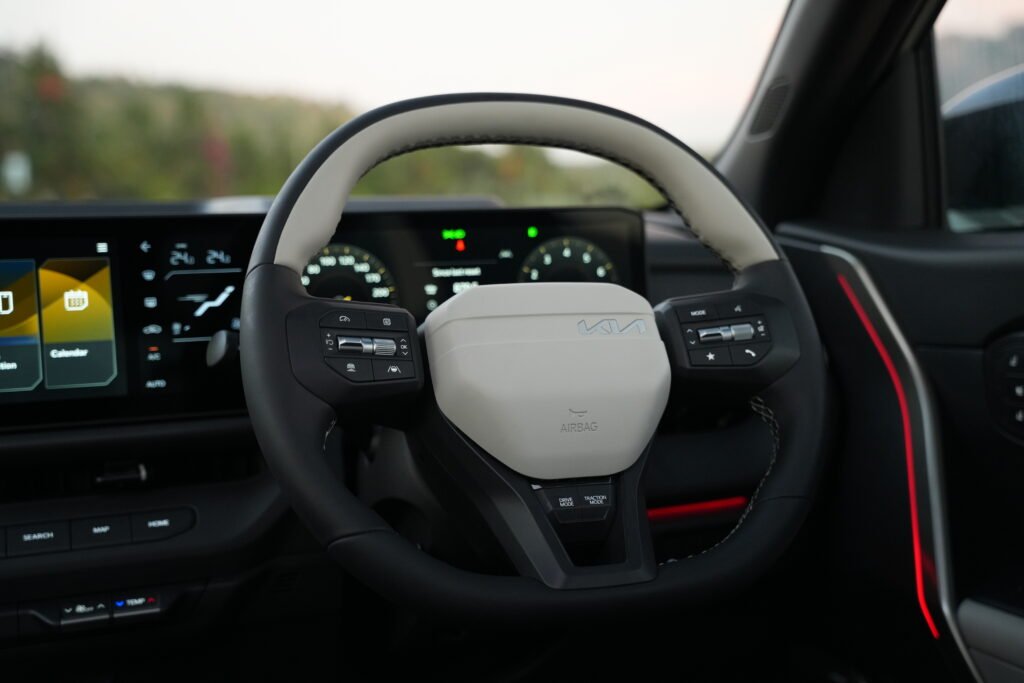
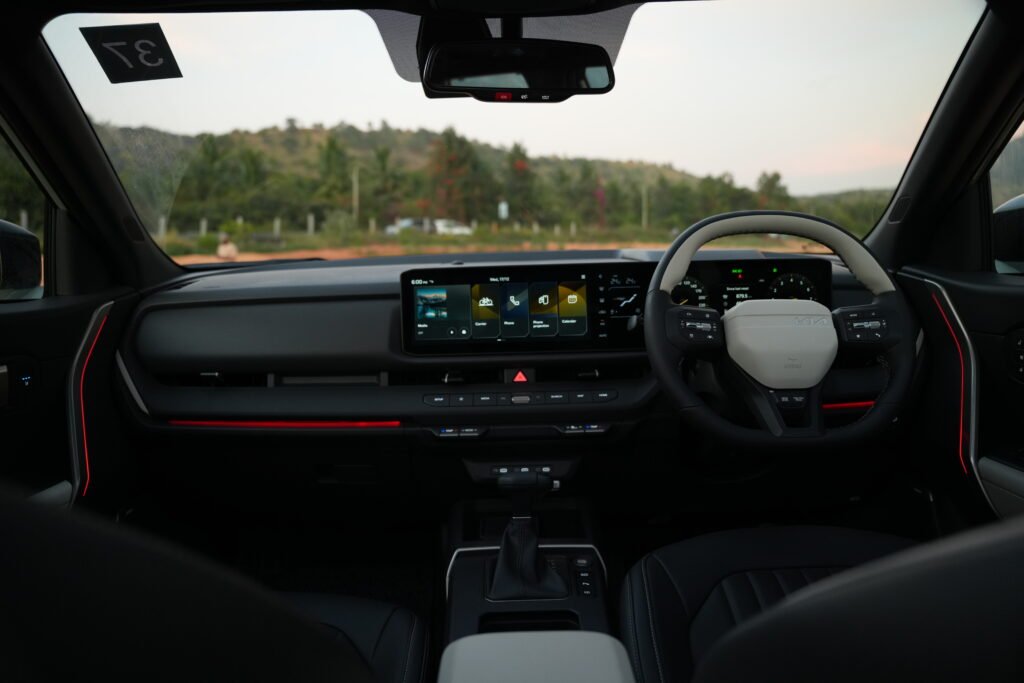
The dashboard draws inspiration from the EV9’s interior architecture. An upright, layered layout creates a sense of depth. The smooth texture on the dashboard plastic does show nail marks and scratches more readily than a patterned surface would. That is worth noting, particularly if the car will be used by a family with children.
Screens and Controls
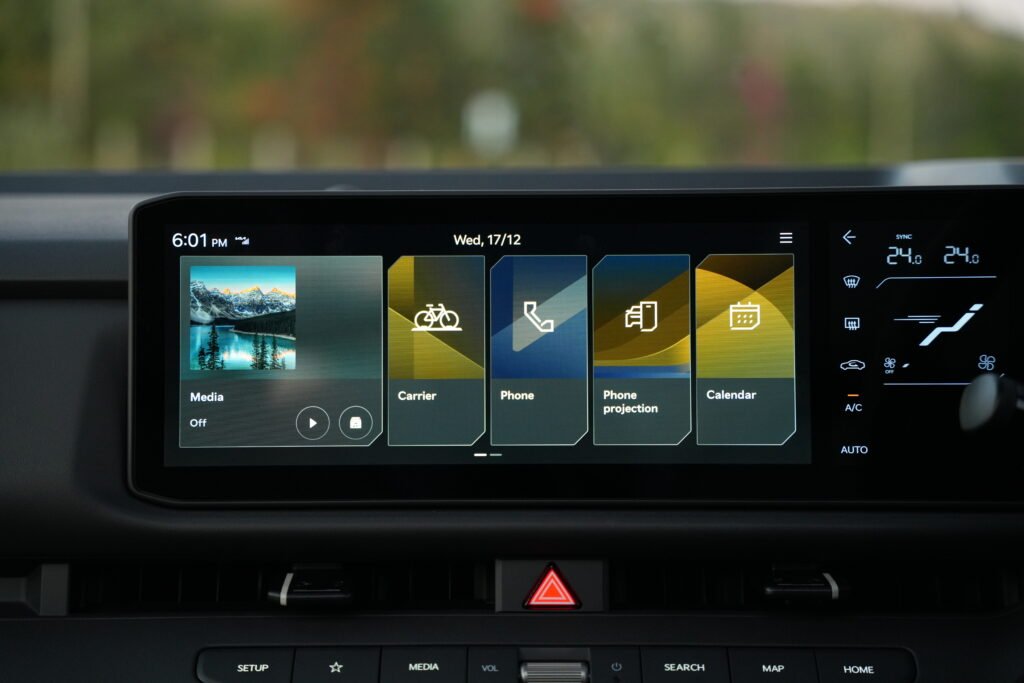
The Trinity Panoramic Display houses dual 12.3 inch screens in a single seamless panel, covering infotainment and the digital instrument cluster. The display is sharp, responsive, and well laid out. The infotainment interface is intuitive and does not require a learning curve.
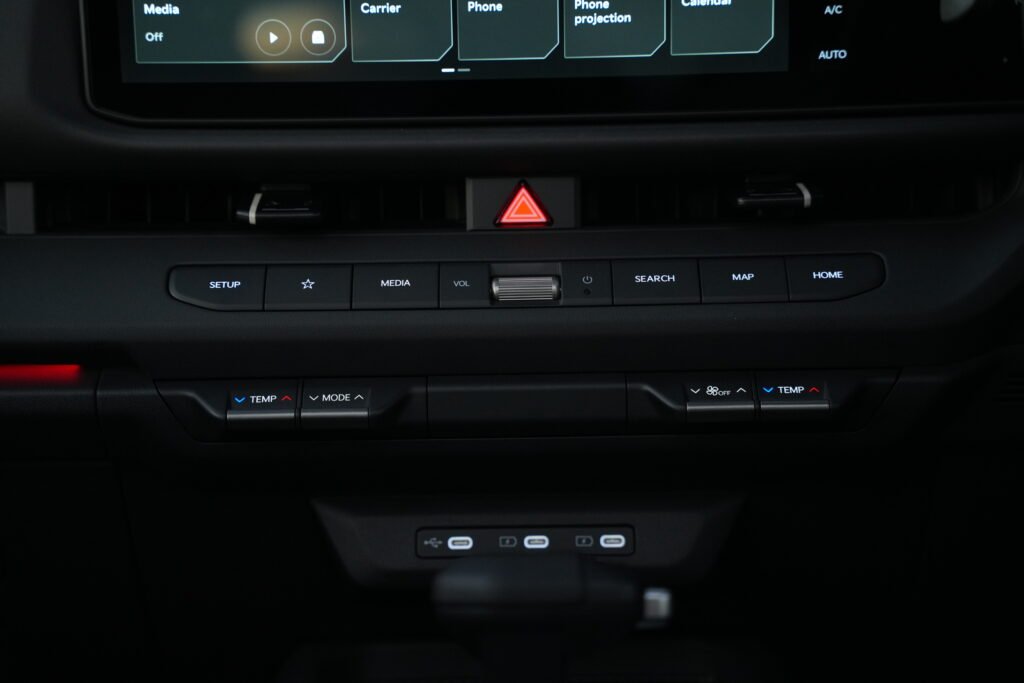
Importantly, physical AC controls are retained below the screen. That is the right decision for daily usability. The AC control display can be partially obscured by the steering wheel in certain driving positions, which is a minor but real ergonomic oversight.
The Bose 8 speaker sound system sounds genuinely good. It is one of the better audio setups available in this segment at this price.
Features and Comfort
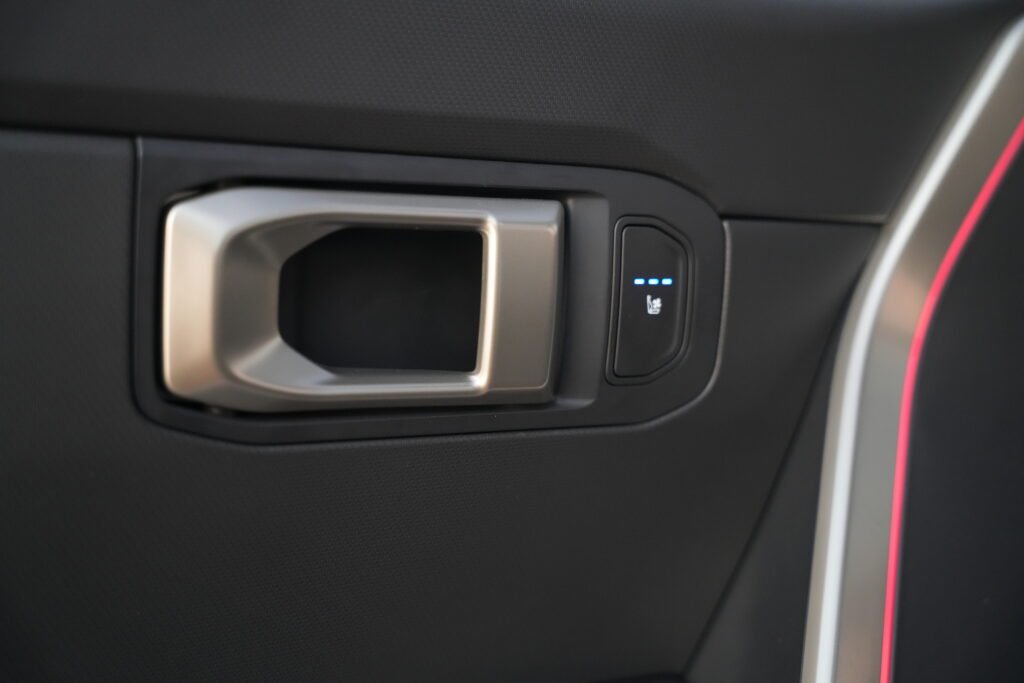
The 10 way powered driver seat with memory function, 64 colour ambient lighting, ventilated front seats, and the dual pane panoramic sunroof are available on higher variants. These are features that change the daily experience rather than just filling a brochure. The seat memory function, in particular, earns its place every time more than one person drives the car.
Rear Seat
The longer wheelbase was expected to deliver a significant rear seat improvement. In practice, the gains are present but more modest than the dimensions suggest.
Legroom is good. Headroom is comfortable even with the panoramic sunroof. The seating posture is natural and the under thigh support is adequate for medium length journeys.
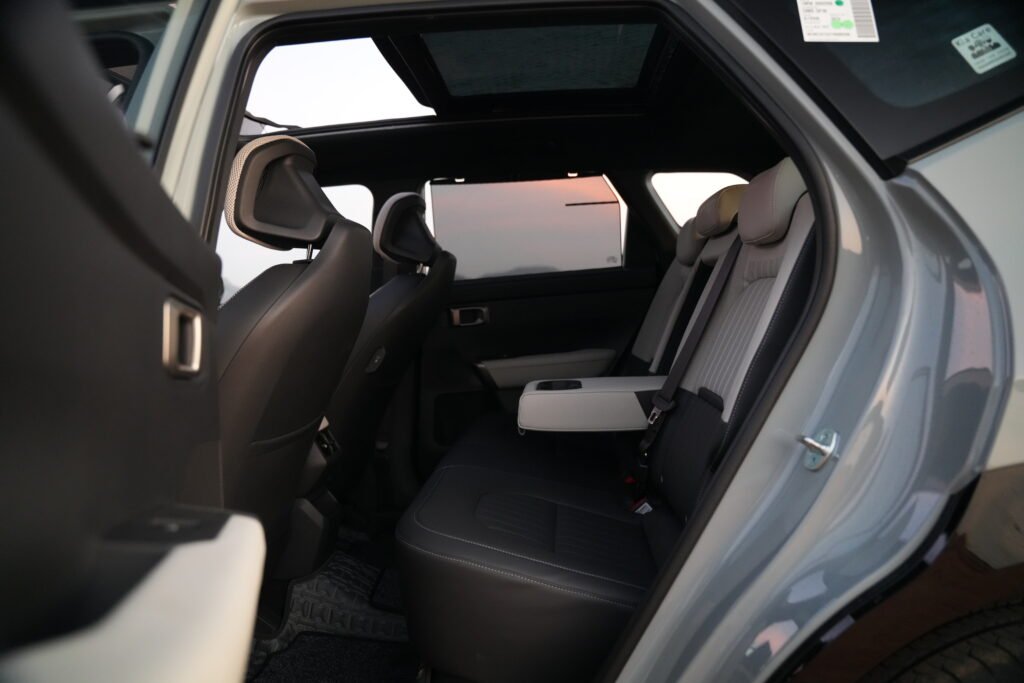
However, the dark interior theme on most variants can make the rear cabin feel slightly less airy than expected, despite the sunroof overhead. Additionally, the overall sense of space does not feel dramatically different from the previous generation in daily use.
It is comfortable. It is practical. For a family of four, it works well. It is just not a class leader in the way the rear seat improvements were anticipated to be.
Features That Actually Matter
The ADAS Level 2 plus suite with 21 autonomous safety features is the headline technology addition. It covers adaptive cruise control, lane keep assist, lane change assist, blind spot monitoring, and front collision warning. On higher variants, these systems work reliably in real world highway conditions. They add a genuine layer of safety confidence on long runs.
The flush door handles that motorise on approach are a segment first. They improve the exterior design cleanness and add a premium quality to the entry experience that becomes the expectation within a week of ownership.
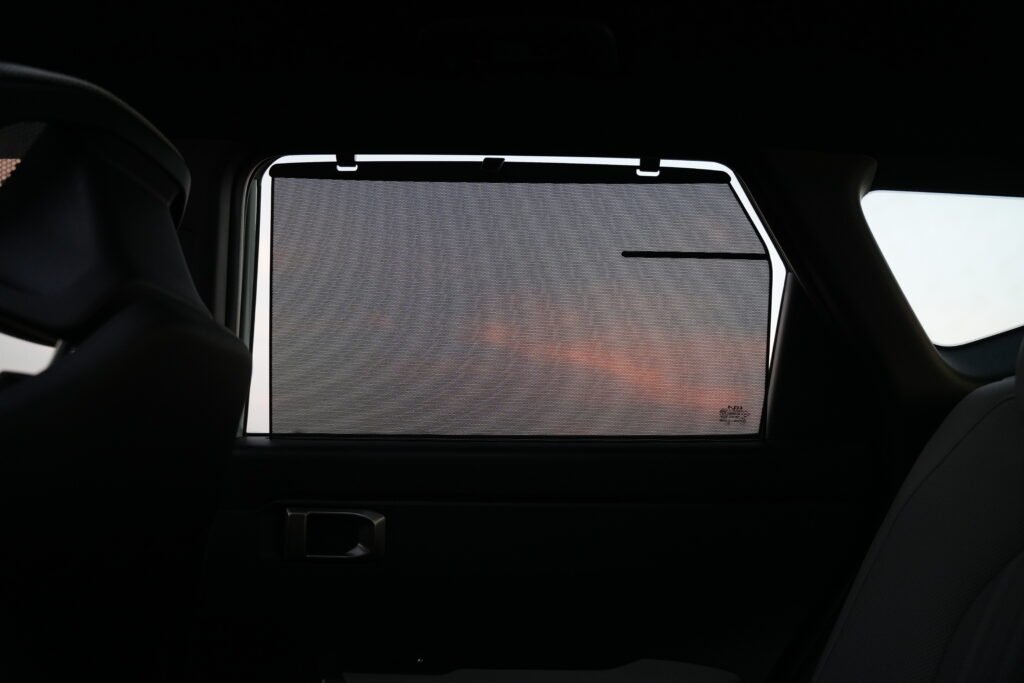
The Kia Connect diagnostics system allows remote monitoring of vehicle health, tyre pressure, and live location. Additionally, over the air software updates mean the car can receive feature improvements without a dealership visit. Both are meaningful long term ownership advantages.
The 64 colour ambient lighting is adjustable and adds a mood quality to night driving without being excessive. The panoramic sunroof across all variants from HTK(O) upward makes the cabin feel significantly more open regardless of weather
Safety
The 2026 Seltos comes standard with 6 airbags and a 24 standard safety feature pack across all variants. Higher trims add the full Level 2 plus ADAS suite with 21 features.
The car has not yet been tested by Bharat NCAP or Global NCAP at the time of this review. Kia claims improved crash protection and torsional rigidity from the new K3 platform. However, the absence of independent crash test validation is a gap that buyers at this price point should note. Given Kia’s strong safety record with previous Seltos generations, the expectation is positive, but formal confirmation has not been provided yet.
Engine & Transmission
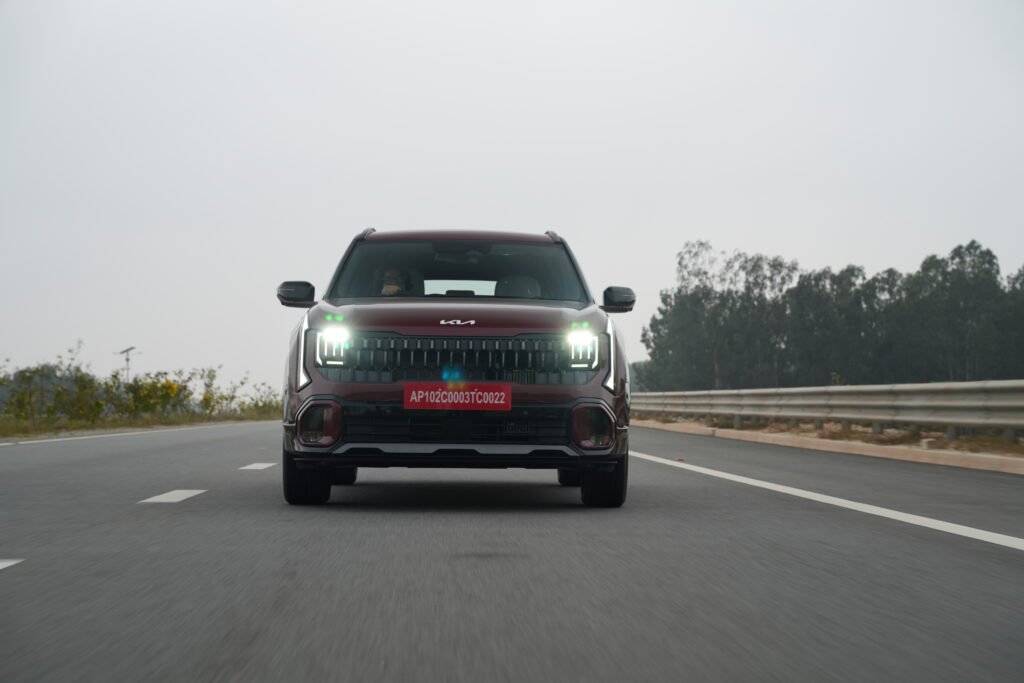
1.5 Litre NA Petrol
The naturally aspirated petrol produces 113 bhp and 144 Nm, paired with either a 6 speed manual or an IVT automatic.
In city conditions, this engine is smooth, easy to manage, and completely unstressed. It is the right engine for daily urban commuting. On highways with a full load, it feels noticeably strained above 100 kmph. Overtaking requires planning rather than spontaneity. For buyers who primarily drive in cities and occasionally use highways, it works well. For frequent highway users, the turbo petrol is the right call.
1.5 Litre Turbo Petrol
The turbo petrol produces 158 bhp and 253 Nm, available with a 6 speed iMT or 7 speed DCT.
This is the most satisfying engine in the range. Highway cruising is relaxed and confident. Overtaking happens without drama. The DCT delivers fast and smooth shifts that suit the engine’s character well. In city conditions, fuel efficiency drops to around 10 to 12 kmpl in heavy traffic. On steady highway runs, it returns 17 to 20 kmpl.
The iMT is an interesting option for buyers who want the turbo engine’s power with manual gearbox control but without a traditional clutch pedal.
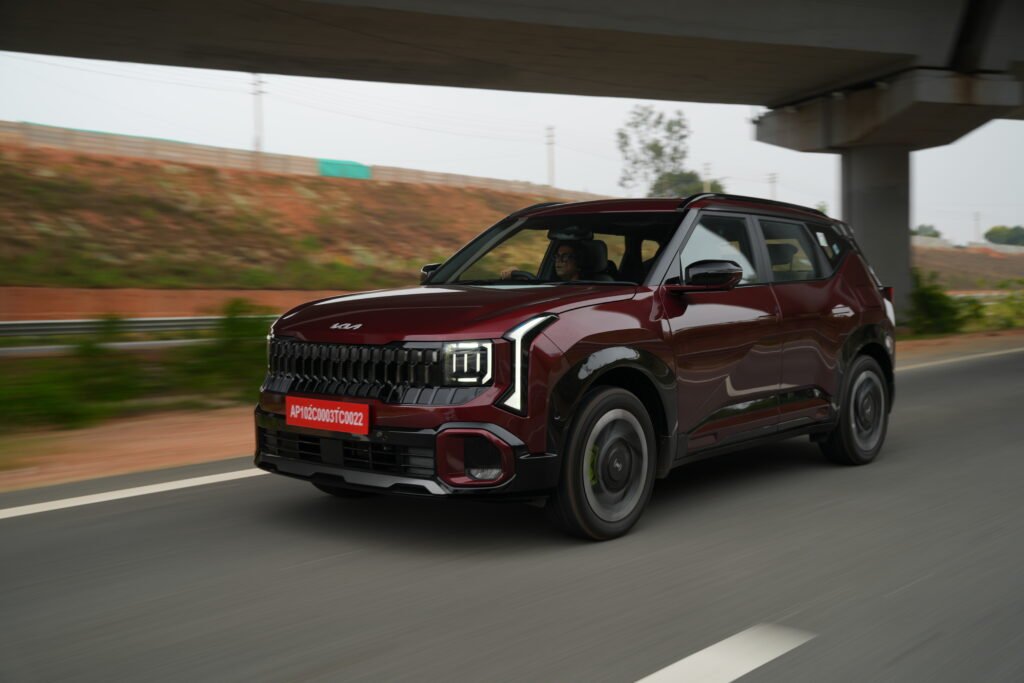
1.5 Litre Diesel
The diesel produces 113 bhp and 250 Nm, available with a 6 speed manual or a 6 speed torque converter automatic.
The torque character suits highway driving especially well. The 250 Nm pulls with effortless confidence in the mid range. City fuel efficiency runs around 9 to 11 kmpl. Highway figures come in around 16 to 17 kmpl. The torque converter automatic has a slight hesitation during sudden hard acceleration, but in normal driving it is smooth and easy to live with. For buyers who cover high monthly distances on highways, the diesel automatic remains the most complete long distance option.
Driving Dynamics & Braking
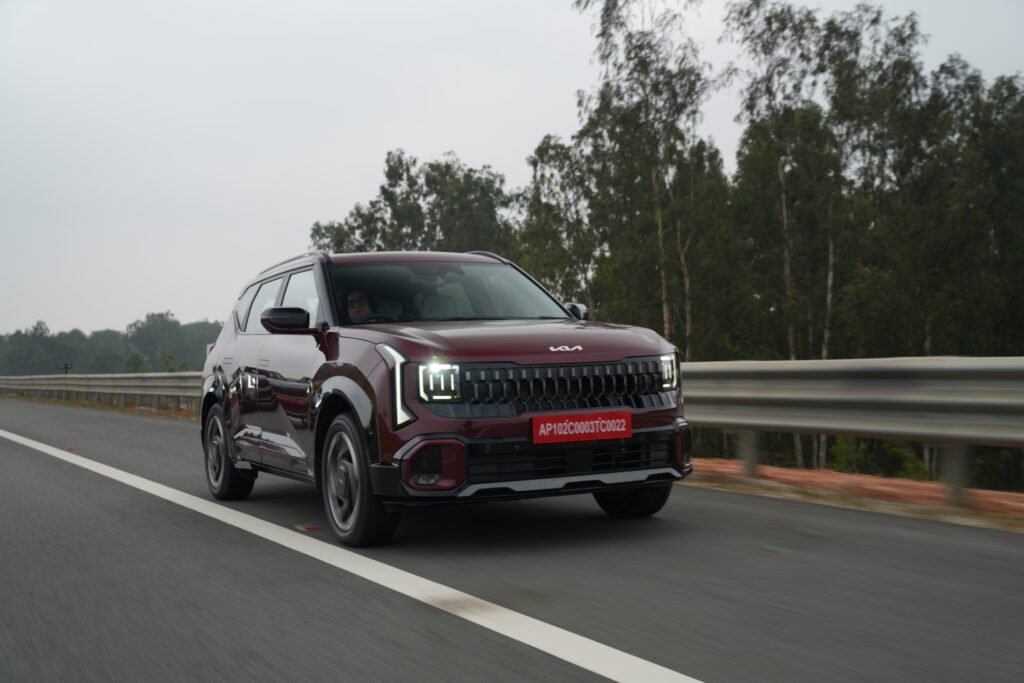
The Seltos drives with a comfort oriented, settled character. It is not trying to be engaging. It is trying to be reassuring.
Steering is light at low speeds and gains appropriate weight on highways. Directional stability is good. The car tracks well without demanding constant corrections.
Braking uses four wheel disc brakes across higher variants. However, the pedal feel is soft and progressive rather than sharp. It requires more pedal travel before full braking force builds. This feels slightly vague in comparison with some competitors. It is not unsafe, but buyers upgrading from a car with crisper braking feedback will notice the difference.
Ride & Handling
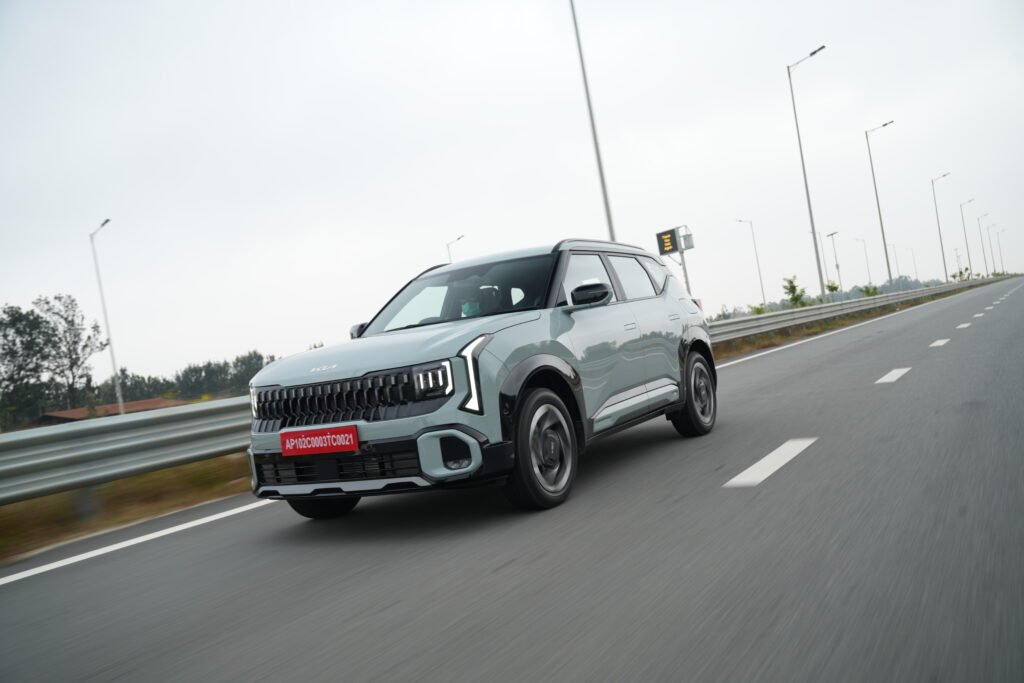
The new K3 platform delivers a noticeably softer ride compared to the previous generation. Over most road surfaces, this is a positive improvement. Highway undulations are absorbed comfortably. Long distance fatigue is low.
However, sharp potholes and sudden surface changes are felt inside the cabin more than a stiffer setup would allow. The softness that works well for comfort trades some composed response to abrupt inputs.
Body roll is present during sharper direction changes. It is predictable and controlled, but enthusiastic drivers will find the Seltos more float than planted. As a result, the Seltos is most comfortable at a relaxed, unhurried pace.
Overall, this is a car tuned for mass market comfort and family usability. That is exactly the right decision for the audience it is built for.
Value for Money
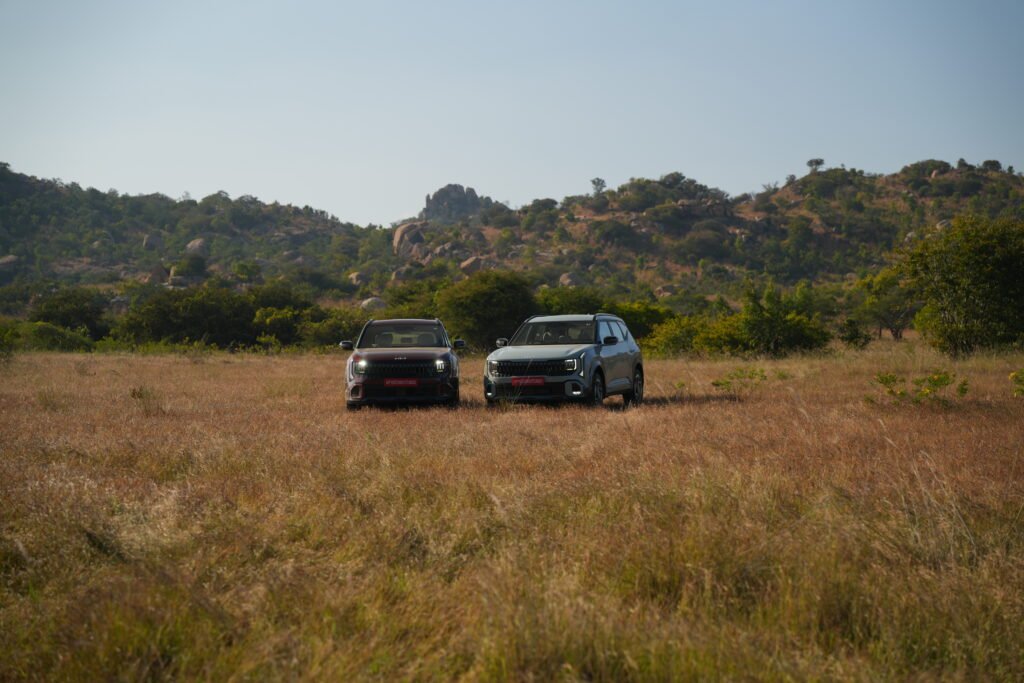
The HTE at Rs. 10.99 lakh is an entry point for buyers who want the Seltos nameplate and the new platform’s safety architecture on a tight budget. It covers the essentials but misses most of the features that define the ownership experience.
The HTK(O) is where the Seltos starts to make a complete case. It adds the panoramic sunroof, ventilated seats, and a more complete feature set at a price that sits comfortably within the mid-segment range. For most buyers, this is the right variant to start the conversation from.
The HTX(A) turbo petrol DCT is the sweet spot for buyers who want the best powertrain without going to the GT trim pricing. It brings the turbo engine, the DCT, ADAS, and a strong feature set at a price that is easier to justify.
The GTX(A) and X-Line trims are for buyers who want everything — the full ADAS suite, the 10 way powered seat, the memory function, and the distinctive styling. At Rs. 19 to 20 lakh, the comparison with larger SUVs becomes natural, but the Seltos holds its own through feature quality and refinement
Pros
- Best in segment length at 4,460 mm with an 80 mm longer wheelbase than previous generation
- Fit and finish quality is among the strongest in the compact SUV segment
- Wide powertrain range covers city, highway, petrol, and diesel buyers comprehensively
- Star Map LED connected tail lamps are a genuinely memorable design element
- Flush motorised door handles are a segment first and a meaningful premium touch
- 24 standard safety features across all variants, including 6 airbags as standard
- Level 2 plus ADAS with 21 features on higher trims works reliably in real conditions
- Bose 8 speaker audio system delivers on its claim
Cons
- Bharat NCAP and Global NCAP ratings not yet available at time of review
- Braking pedal feel is soft and vague relative to segment expectations
- Gloss black bumper and exterior elements will scratch and swirl in Indian conditions
- Rear seat space improvement is present but less significant than the size increase suggests
- Dashboard smooth plastic texture shows nail marks and scratches more visibly than expected
- Dark interior theme on most variants makes the rear cabin feel less open than it could
- Automatic variants are priced significantly higher than manual equivalents
Verdict
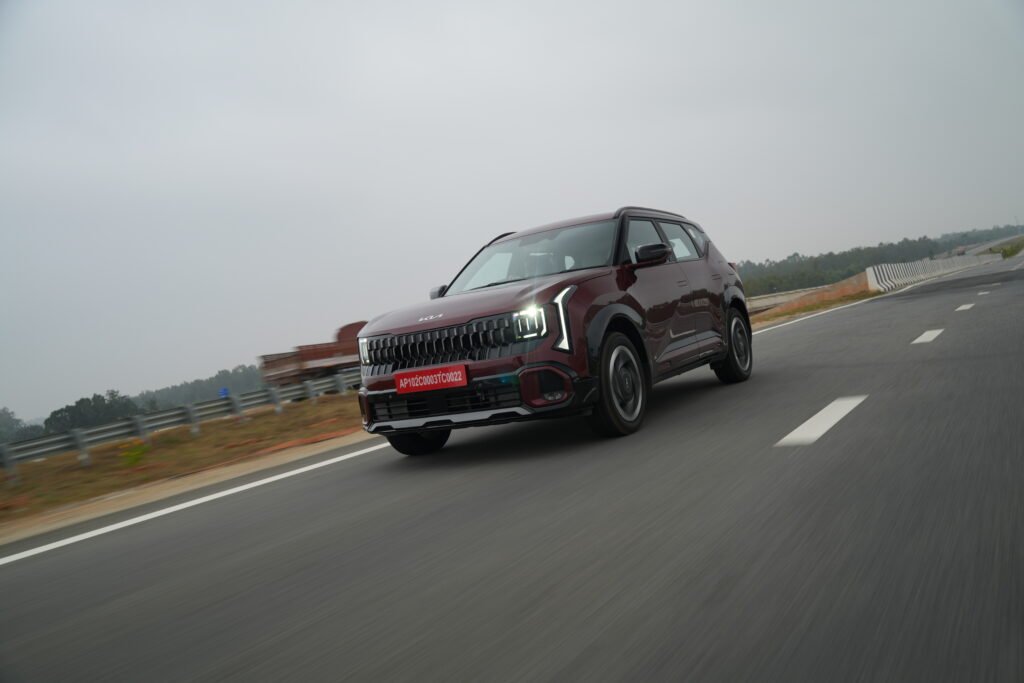
The 2026 Kia Seltos is not the most exciting car in its segment. However, it might be the most complete.
It does not have the Tata Sierra’s design personality or the Grand Vitara’s hybrid efficiency. What it has instead is a rare combination of feature quality, build quality, powertrain flexibility, and daily usability that makes it genuinely difficult to find a serious fault with at any price point across the range.
The buyer who gets the most from the Seltos is the one who wants a car that quietly does everything right. City commute on Monday. Highway run on Friday. Family road trip on Sunday. The Seltos handles all three without asking the buyer to make major compromises.
Buy the HTK(O) if the budget is the priority. Buy the HTX(A) turbo petrol DCT if you want the best daily driving experience in the range. Buy the X-Line if the styling matters as much as the driving.
This is not a passion purchase. It is a smart one. And in 2026, it is smarter than it has ever been.
