

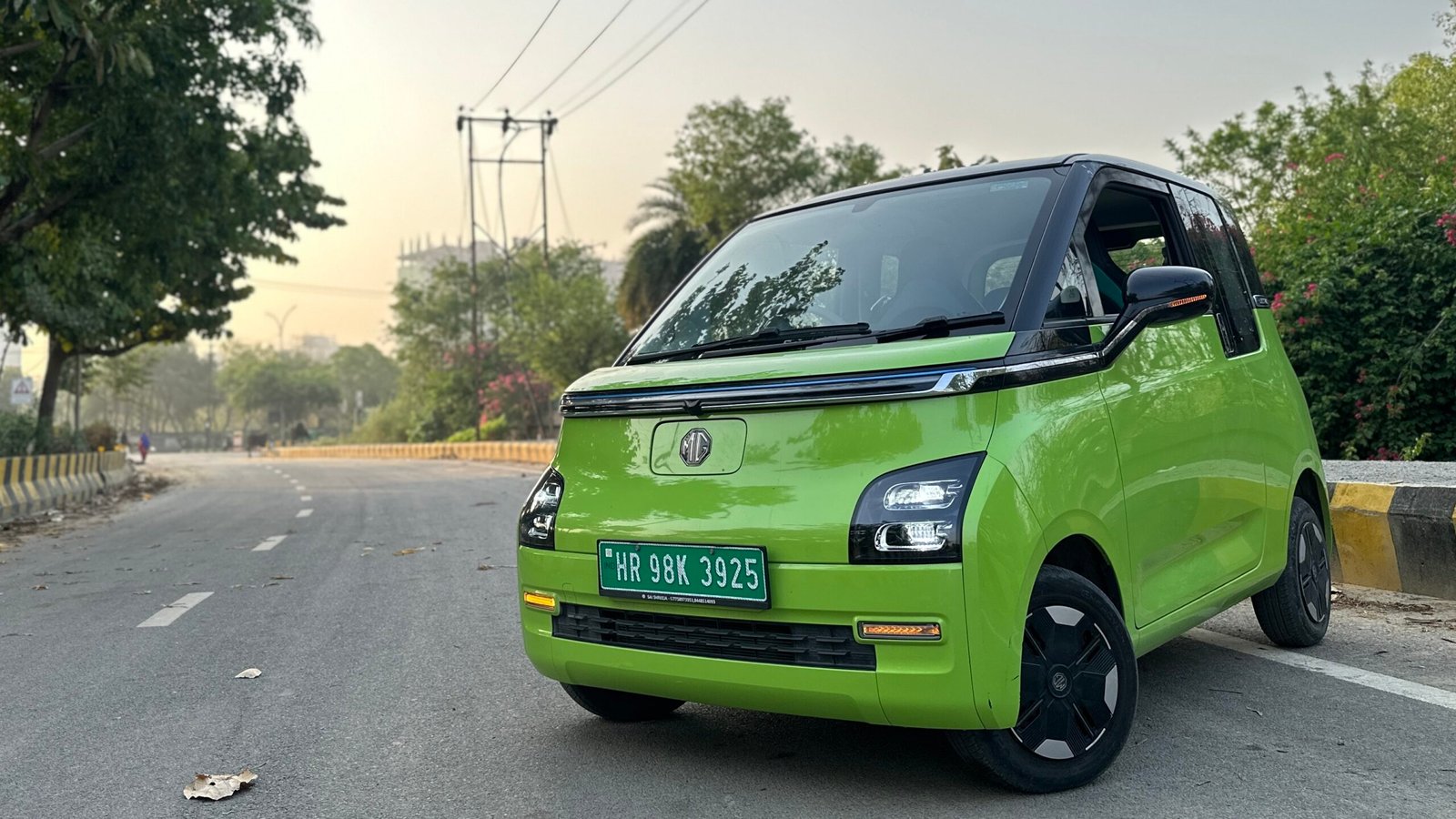
Intro
Not every car needs to do everything.
That is a simple idea, but most car buyers in India still struggle with it. We want the car to handle the daily office commute, handle the highway trip to the hills, handle school runs, handle groceries, and look good doing all of it. The result is a market full of compromise products trying to be everything and excelling at nothing.
The MG Comet EV makes a very different argument. It is small, boxy, electric, and completely uninterested in being your only car. Instead, it wants to be the second car in your household. The one your partner takes to work every morning. The one you use for the market run on Sunday. The one that never needs a petrol pump.
For that specific role, it is one of the most well thought out products in India right now. This review looks at whether the Comet EV delivers on that promise.
Pricing & Variants
The MG Comet EV is available in three broad trims: Executive, Excite, and Exclusive. Additionally, MG has introduced a Blackstorm special edition based on the top spec Exclusive variant, adding blacked out design elements and exclusive interior accents.
As of May 2026, ex-showroom pricing is as follows:
| Variant | Ex-Showroom Price |
| Executive | Rs. 7.00 lakh (approx) |
| Excite | Rs. 8.50 lakh (approx) |
| Exclusive | Rs. 9.50 lakh (approx) |
| Blackstorm Edition | Rs. 7.80 lakh (BAAS) / Rs. 10.00 lakh (outright) |
MG also offers the Comet under their Battery as a Service programme. Under BAAS, the battery is rented rather than purchased outright. This lowers the upfront cost while maintaining full electric driving range and performance. The BAAS option is worth considering if a lower initial price is the priority.
Dimensions
| Parameter | Measurement |
| Length | 2,974 mm |
| Width | 1,505 mm |
| Height | 1,640 mm |
| Wheelbase | 2,010 mm |
| Ground Clearance | 165 mm |
| Tyre Size | 145/70 R12 |
These dimensions tell the full story. The Comet is genuinely tiny. However, as we will get to, MG has used that footprint very cleverly.
Exterior Design
The Shape
The Comet does not try to look like a shrunken SUV or a sporty crossover. It is boxy, upright, and completely at peace with that. Tall glasshouse, flat surfaces, short overhangs — the design language is almost architectural.
In person, it reads as distinctive rather than odd. It has a presence that catches attention in traffic precisely because it looks like nothing else around it.
Front and Details
The front carries dual projector LED headlamps with integrated DRLs. The LED indicators on the ORVMs are a thoughtful touch for a car at this price. The charging port sits at the front of the car, which makes plugging in at home considerably more convenient than a rear mounted port in a tight parking space.
Blackstorm Edition
The Blackstorm variant adds blacked out elements and red accents throughout. It brings a sportier and more premium flavour to the entry level Comet EV lineup without changing the core character. For buyers who want the Comet to make more of a visual statement, the Blackstorm is worth considering.
Wheels
The 12 inch wheels are small. They suit the car’s city persona, but they also mean that at higher speeds, stability is limited. This is a car designed for city use and the wheel size reflects that honestly.
Design Signature
The most distinctive element on the Comet EV is the relationship between the tall glasshouse and the boxy lower body. Most small cars try to look sporty by lowering the roofline and adding flared arches. The Comet does the exact opposite. It maximises glass area and keeps surfaces flat, which makes the interior feel considerably larger than the exterior dimensions suggest. That is a genuinely clever design decision – using form to serve function rather than just aesthetics.
Interior & Cabin
First Impression
Step inside and the first thing you notice is how spacious it feels relative to the exterior size. The tall roofline and large glass area create an open, airy quality that is unusual for a car under 3 metres long.
The dashboard is clean and modern. MG has used a light colour theme which adds to the sense of space. Nothing feels cramped or claustrophobic.
Screens and Controls
The floating twin display is the centrepiece of the cabin. A 10.25 inch touchscreen handles infotainment, while a matching digital instrument cluster sits alongside it. Both displays are sharp and responsive.
Wireless Android Auto and Apple CarPlay are standard on higher variants. The iSmart connected car system offers 55 plus connected features and 100 plus voice commands, which is a strong tech package for this price band.
Importantly, the Comet retains physical buttons for the AC controls. That is a decision that improves daily usability significantly. Adjusting temperature without navigating a touchscreen menu is a small thing, but it matters every single day.
Storage and Practicality
Storage is well thought out throughout the cabin. Door pockets, a centre console, and multiple small trays cover daily needs without fuss.
Dual airbags are standard for safety. ABS with EBD, electronic stability control, hill hold control, and all round disc brakes are also part of the safety package, which is impressive for a car at this price.
Rear Seat
The rear seat experience in the Comet is better than the exterior dimensions suggest, but it does have honest limitations.
Knee room is decent for a car this short. The one touch slide and recline function on the passenger seat makes rear entry on the left side manageable. However, under thigh support is limited. Adults on journeys longer than 30 to 40 minutes will notice the discomfort.
For children, the rear seat is perfectly comfortable. For two adults on short city trips, it works. For regular adult rear passenger use on longer runs, it will feel restrictive.
Overall, the Comet is best treated as a comfortable four seater for city distances rather than a long distance family car
Features That Actually Matter
The 10.25 inch wireless connected infotainment system is the headline feature, and it delivers in daily use. Wireless phone mirroring means no cable clutter on the centre console. The iSmart system allows remote monitoring, geo-fencing, and over the air updates.
The all round disc brake setup is worth highlighting. Front and rear disc brakes, along with ABS, EBD, hill hold control, and electronic stability control, form a genuinely strong safety foundation for a city car at this price. Most competitors in this segment run rear drums.
The front mounted charging port is a small detail that improves real world ownership meaningfully. In a tight home parking spot or a public charging bay, plugging in from the front is considerably less awkward than reaching around the rear.
The electrically foldable ORVMs on higher variants are useful for narrow parking spaces and colony lanes. Additionally, the rear parking camera added in the 2025 update removes a genuine blind spot concern when reversing in tight areas.
Safety
The Comet EV comes with dual airbags, ABS with EBD, electronic stability control, electronic parking brake, hill hold control, and all round disc brakes as standard. The vehicle body uses 17 hot stamping panels for high strength construction.
However, the Comet EV does not currently hold a Bharat NCAP or Global NCAP safety rating. For buyers who prioritise crash test credentials, this is a gap worth noting. The structural and active safety equipment is strong on paper, but independent crash test validation has not yet been provided..
Battery, Motor & Range
The Battery
The Comet EV uses a 17.3 kWh prismatic lithium ion battery pack. ARAI certified range is 230 km. In real world city driving conditions, most owners report 180 to 200 km per charge, which is a consistent and predictable real world figure.
For a car positioned as a city commuter handling 20 to 40 km daily, a full charge every few days is all that is needed. That rhythm suits home charging very naturally.
The Motor
The rear mounted motor produces approximately 42 PS and 110 Nm of torque. That is enough for city driving. Acceleration to urban speeds is brisk and linear. The instant torque delivery that all EVs offer makes the Comet feel more responsive than its power figures suggest.
However, the performance character changes on the highway. Above 80 kmph, the Comet feels noticeably less composed. The small wheels, short wheelbase, and tall body all work against highway stability. This is not a highway car and it does not pretend to be.
Charging
The Comet supports 3.3 kW AC charging, which means a full charge from empty takes approximately 7 hours at home. No DC fast charging is available, which is a meaningful limitation if you rely on public fast chargers regularly. For most buyers using this as a city second car with home charging, however, the 3.3 kW capacity is sufficient.
Driving Dynamics & Braking
The Comet drives with the light, easy confidence of a car that knows its purpose.
Steering is very light at low speeds. Parking and manoeuvring in tight city spaces is effortless. The 4.2 metre turning radius is among the smallest of any car on sale in India, which means U-turns on narrow lanes that defeat larger cars are completely stress free.
Braking is strong and reassuring. All round disc brakes give the Comet confident stopping power in stop and go traffic. The regenerative braking adds a mild engine brake feel that becomes natural within a few minutes of driving.
That said, the braking feel at higher speeds is less confidence inspiring. The short wheelbase and small tyres mean hard braking from above 80 kmph requires more distance than expected.
Ride & Handling
City Behaviour
In the city, the Comet is genuinely pleasant to drive. The suspension absorbs small bumps and road imperfections reasonably well. The 165 mm ground clearance handles speed breakers and broken patches without drama.
That said, the suspension is on the stiffer side relative to the car’s height. As a result, sharp bumps and uneven surfaces are felt inside the cabin more than on softer setups.
Body Roll and Stability
Body roll is noticeable during quick direction changes. The tall body and short wheelbase create a physically unavoidable tendency to lean. It is not unsafe, but it is present, and it requires a calm, unhurried driving style to manage comfortably.
On the highway, the Comet feels noticeably less stable above 80 kmph. Wind buffeting, small wheel contact patches, and the tall silhouette all contribute. This is a car that is happiest below 70 kmph. In that environment, it is genuinely enjoyable to drive.
Value for Money
The Executive variant at approximately Rs. 7.00 lakh is the value pick for buyers who want the Comet’s city EV experience without full feature spend. It covers the core needs: electric range, city manoeuvrability, and the twin screen setup.
The Excite variant adds the rear parking camera and electrically foldable ORVMs, both of which genuinely improve daily usability. For most buyers, this is the sweet spot.
The Exclusive is the complete Comet experience. It adds leatherette seats, the full connected car suite, and premium interior touches. At approximately Rs. 9.50 lakh outright, it sits close to the Tata Tiago EV’s upper variants, which offer more highway ability and a longer range variant. The comparison is worth making before finalising.
The BAAS option deserves honest consideration. If home charging is available and the lower upfront cost improves affordability, BAAS makes the Comet genuinely accessible at Rs. 4.99 lakh plus per kilometre charges.
Pros & Cons
Pros
- Smallest turning radius in the segment at 4.2 metres, genuinely transformative for city parking
- All round disc brakes and electronic stability control at this price are impressive
- 180 to 200 km real world range is more than sufficient for a city second car
- Light colour interior theme and tall glasshouse make the cabin feel considerably larger than the footprint suggests
- Running costs are minimal; public charging at Rs. 15 per kWh keeps daily costs very low
- Front mounted charging port improves home and public charging convenience
- Physical AC controls retained, a genuinely useful daily usability decision
- BAAS programme lowers upfront cost meaningfully for the right buyer
Cons
- No DC fast charging support, which limits public charging speed significantly
- Body roll is noticeable during direction changes and quick manoeuvres
- Highway stability feels uncertain above 80 kmph
- Rear seat under thigh support is poor for adult passengers on longer journeys
- No NCAP safety rating available currently
- 165 mm ground clearance is below the segment average, limiting confidence on very bad roads
- 12 inch wheels look proportionally small and contribute to the highway instability
Verdict
The MG Comet EV works best when you stop comparing it to cars it was never meant to be.
It is not a family highway car. It is not a Nexon EV rival. It is not trying to replace your primary vehicle. It is trying to make every other trip in your household easier, cheaper, and more convenient.
For that role, it does the job extremely well. The city manoeuvrability is class leading. The running costs are genuinely negligible. The cabin is more spacious than the exterior suggests. The feature set at the upper trims is strong for the price.
The buyer who gets the most from the Comet EV is the one who drives 25 to 40 km daily in an urban environment, has a charging point at home or in their building basement, and already has a bigger car for weekends and highway trips. For that buyer, the Comet EV is one of the smartest purchases in the Indian market right now.
Buy the Excite for the best balance of price and features. Add the BAAS option if the upfront cost is a priority. Just make sure home charging is sorted before delivery — because that is the foundation the whole ownership experience rests on.
Review unit driven: MG Comet EV Exclusive | AutoMatta.in
