
Intro
Some nameplates carry weight that numbers alone cannot explain.
The Tata Sierra from the 1990s was not just a car. It was India’s first homegrown SUV with a genuinely distinctive silhouette, a three door layout, and a rear quarter glass design that made it look like nothing else on the road. For a generation of Indian car buyers, the Sierra was the first time a desi brand made something that felt aspirational rather than just affordable.
That car stopped production in 2000. Twenty five years later, Tata is bringing it back, and they have not taken the easy route of simply sticking a retro badge on an existing platform.
The new Sierra is built on the all new Argos platform, launched in November 2025, and positioned between the Curvv and the Harrier in Tata’s lineup. It comes with three engine options including a naturally aspirated petrol, a turbo diesel, and the Hyperion 1.5 litre turbo petrol that we drove here. The turbo petrol is available exclusively with a 6 speed Aisin torque converter automatic.
This is not a nostalgia product dressed in modern clothes. This is Tata’s most technology forward, experience driven car to date, and it uses the Sierra name because it has genuinely earned the right to.
Pricing & Variants
The Sierra is offered across seven broad trims: Smart Plus, Pure, Pure Plus, Adventure, Adventure Plus, Accomplished, and Accomplished Plus. Three engine and five transmission combinations are available across these trims.
The base engine is a 1.5 litre naturally aspirated petrol producing 106 PS and 145 Nm, available with a 6 speed manual or 7 speed dual clutch automatic. The turbo petrol Hyperion unit produces 160 PS and 255 Nm and is paired exclusively with the 6 speed torque converter automatic. The diesel makes 118 PS and up to 280 Nm depending on transmission, available with both manual and automatic gearboxes.
The turbo petrol automatic is available from the Adventure trim upward.
Variant wise ex-showroom pricing as of May 2026:
| Variant | Engine | Transmission | Ex-Showroom Price |
| Smart Plus | 1.5 NA Petrol | 6MT | Rs. 11.49 lakh |
| Pure | 1.5 NA Petrol / Diesel | 6MT | Rs. 12.99 lakh onwards |
| Pure Plus | 1.5 NA Petrol / Diesel | 6MT / 7DCA | Rs. 14.49 lakh onwards |
| Adventure | 1.5 Turbo Petrol / Diesel | 6AT / 6MT | Rs. 15.29 lakh onwards |
| Adventure Plus | 1.5 Turbo Petrol / Diesel | 6AT / 6MT | Rs. 16.99 lakh onwards |
| Accomplished | 1.5 Turbo Petrol / Diesel | 6AT / 6AT | Rs. 18.99 lakh onwards |
| Accomplished Plus | 1.5 Turbo Petrol / Diesel | 6AT / 6AT | Rs. 19.99 lakh (petrol) / Rs. 21.29 lakh (diesel) |
The turbo petrol automatic in the Accomplished Plus trim, which is the variant we focused on for this review, sits at approximately Rs. 19.99 lakh ex-showroom
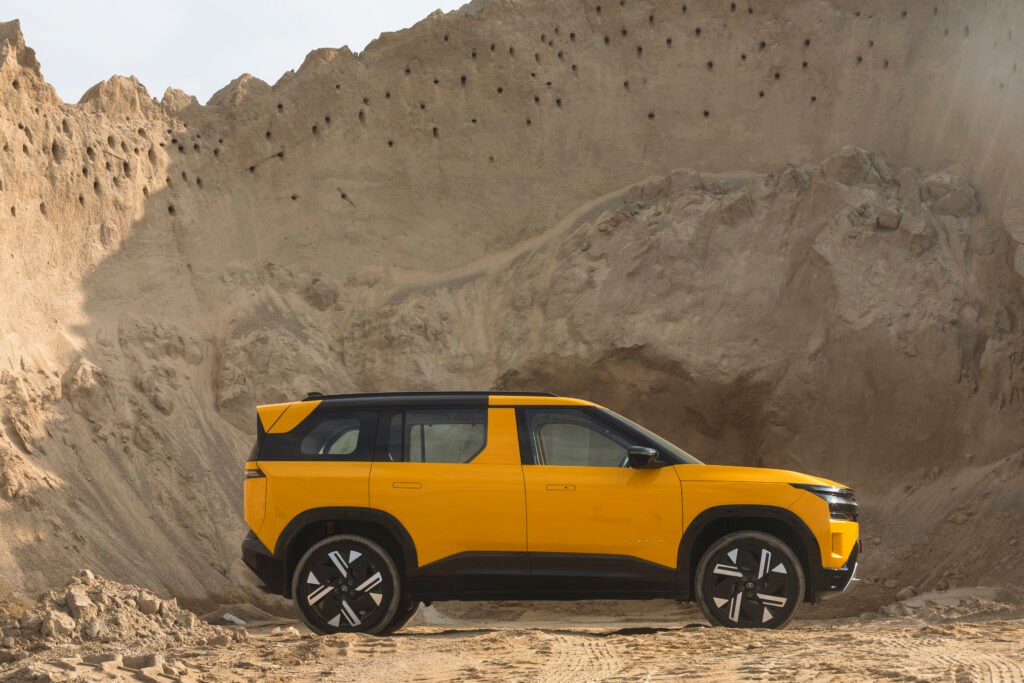
Dimensions
| Parameter | Measurement |
| Length | 4,340 mm |
| Width | 1,841 mm |
| Height | 1,715 mm |
| Wheelbase | 2,730 mm |
| Boot Space | 450 litres (seats up) / 1,257 litres (seats folded) |
| Ground Clearance | 205 mm |
| Tyre Size | 215/65 R17 (base) / 225/55 R19 (top variants) |
Exterior Design
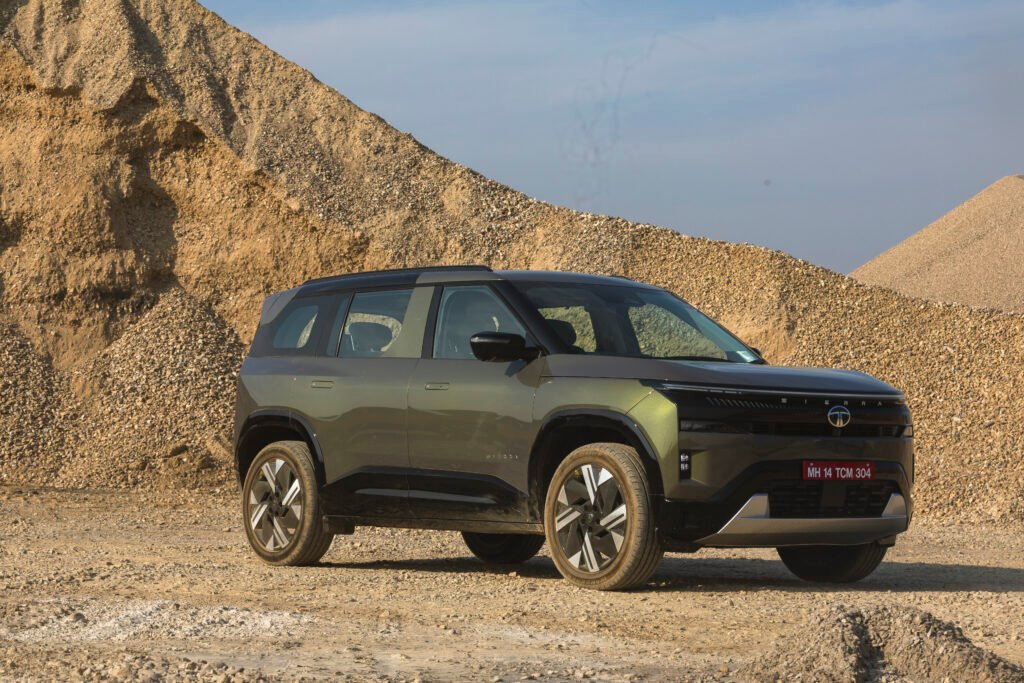
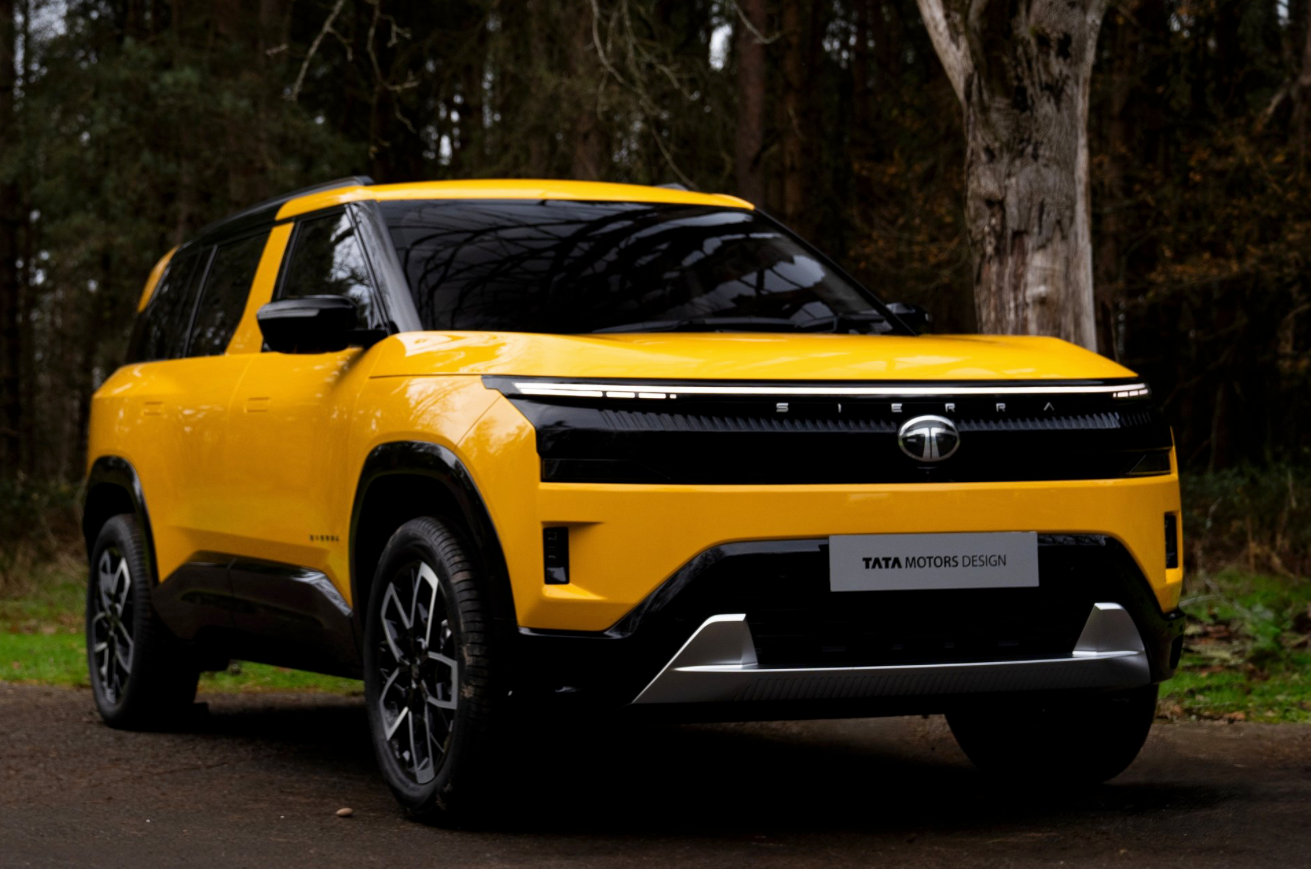
The new Sierra is proof that Tata’s design team has found a very specific confidence.
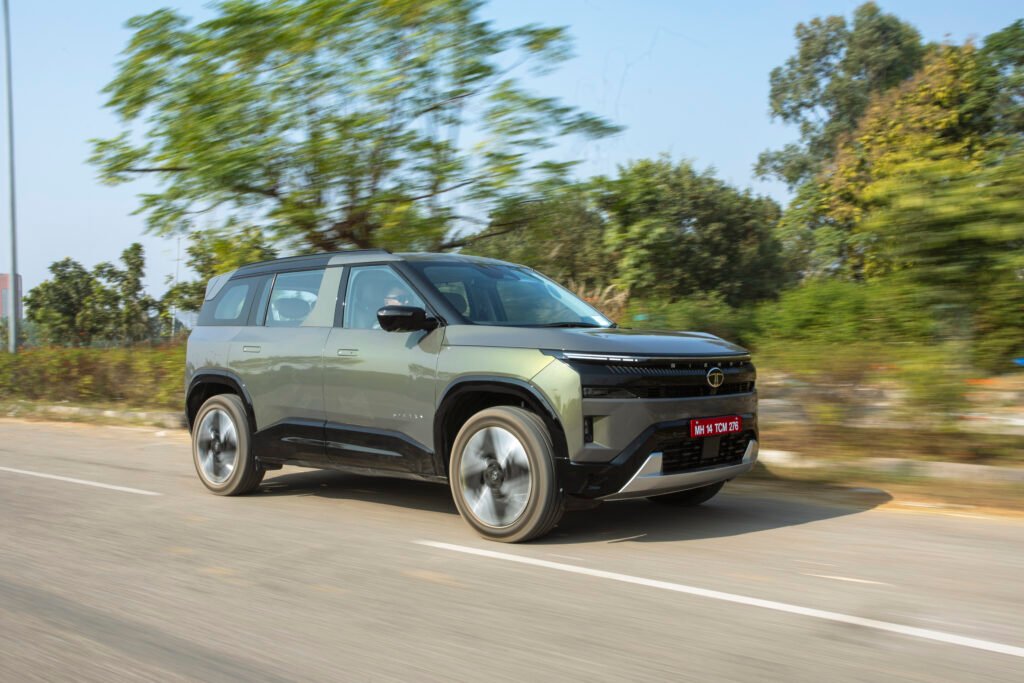
The Argos platform pushes the wheels to the corners, and you see the effect of that immediately in the proportions. The stance is wide and planted, with short overhangs that make the car look like it is ready to move even when it is standing still. The silhouette is upright and boxy, a deliberate design choice that references the original Sierra without copying it.
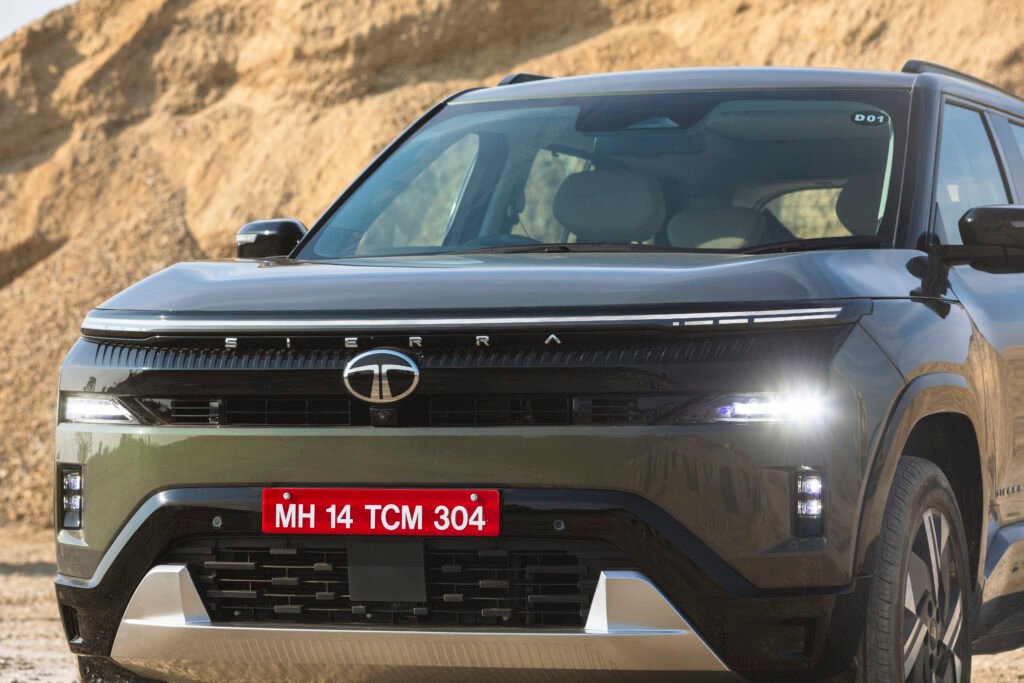
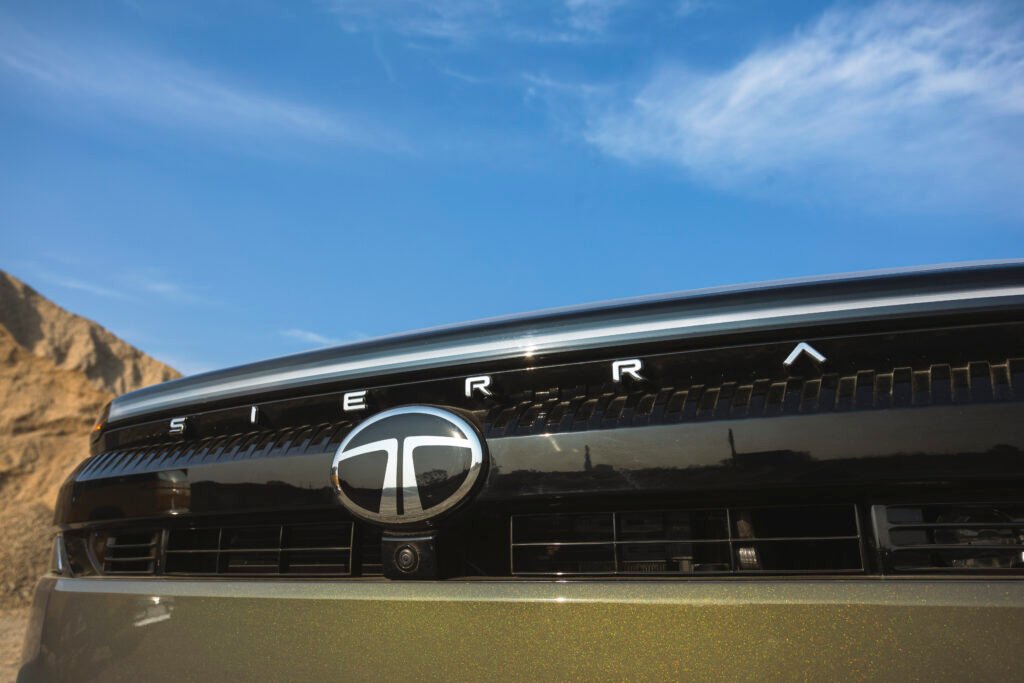
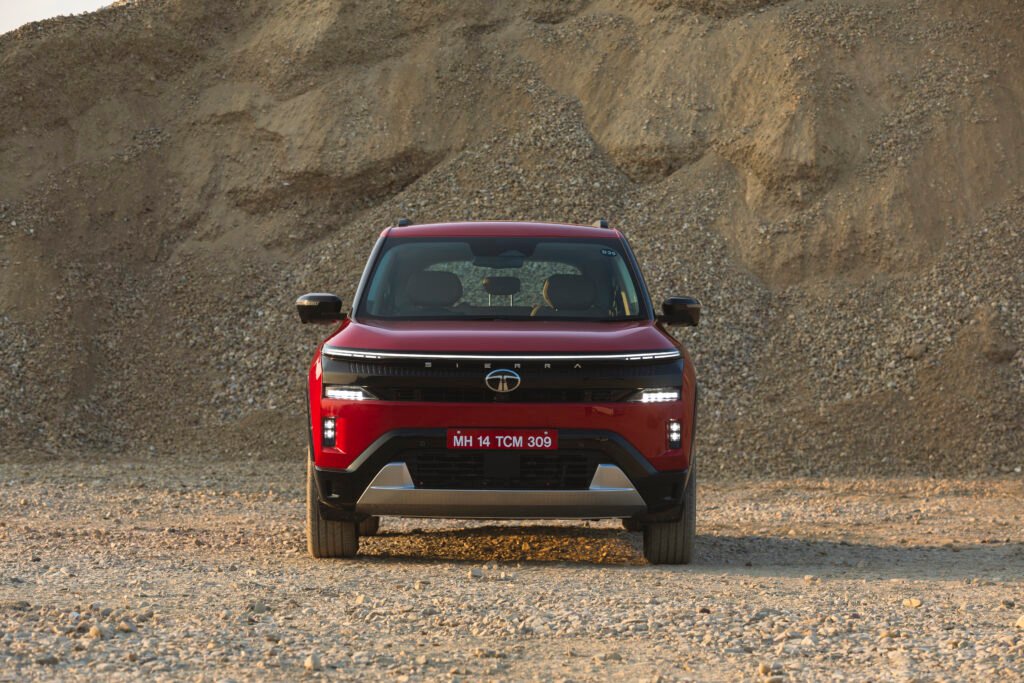
The front end is clean to the point of minimalism. A full width LED light bar runs across the top of the face, with slim LED headlamps on either side. The front surface is almost entirely closed off, giving it an EV-like presence. The 2D Tata logo at the centre integrates the radar sensor for the Level 2 ADAS system, which makes a functional necessity feel like a design decision rather than an intrusion.
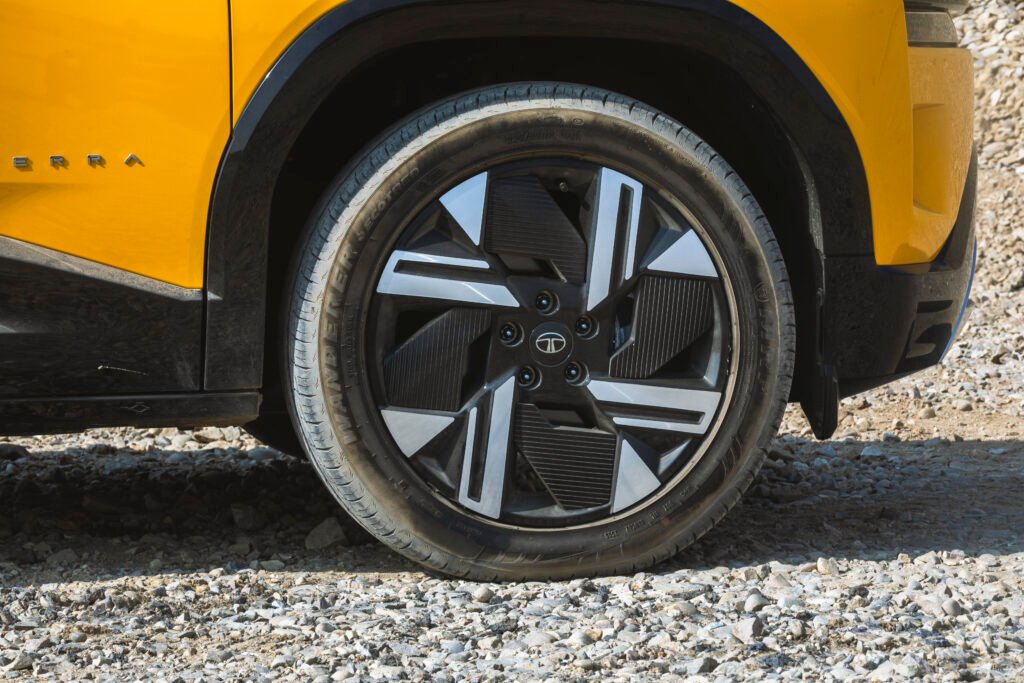
The side profile is where the Sierra’s character lives most completely. The 225/55 R19 wheels on top variants are among the largest in the segment, and the square wheel arches frame them with a purposeful, architectural quality. Flush door handles keep the surface clean. The blacked out B and C pillar treatment with the dark rear glass section is a direct reference to the three door original, translated into a five door modern form in a way that feels respectful rather than forced. It is the kind of design detail that rewards people who know the history.
The panoramic sunroof is enormous. At 1,525 mm by 925 mm, it is the largest in the segment, and it visually extends the roofline in a way that makes the Sierra look more premium from the outside as much as it transforms the cabin experience from the inside.
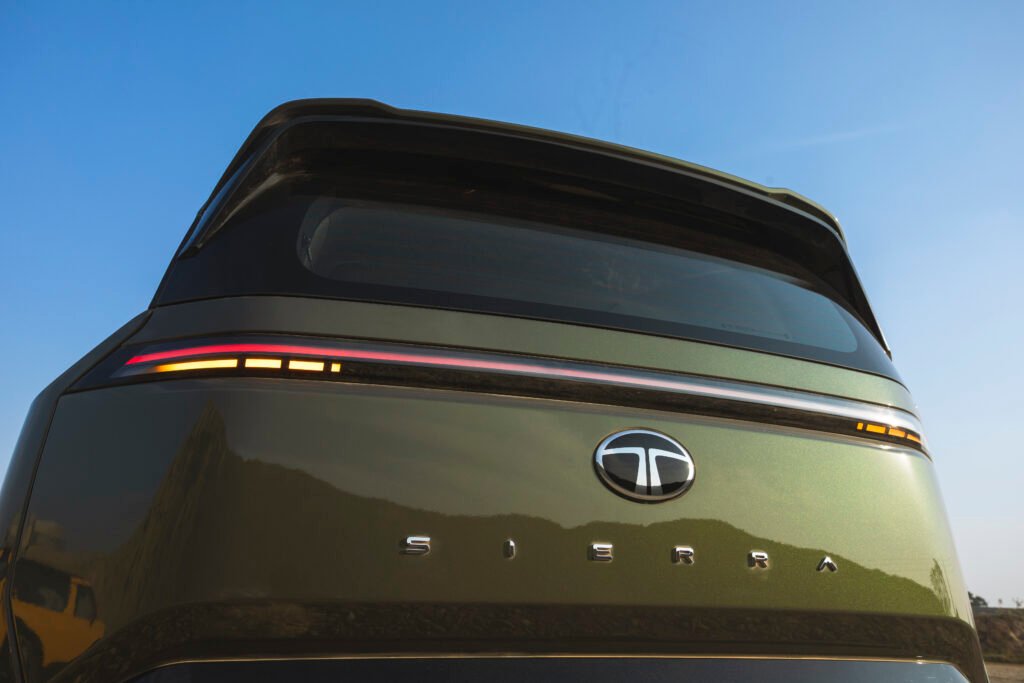
At the rear, a slim light strip with embedded tail lamps gives a clean, modern finish. The single unit tail lamp that lifts with the boot is a beautiful detail. The auxiliary safety lamps that illuminate when the boot is open are small but genuinely thoughtful, the kind of thing a design team adds when they are thinking about how people actually use the car.
Six colour options are available, all with a contrasting black roof. The Sierra exclusive shades, Andaman Adventure, Bengal Rouge, Coorg Clouds, and Munnar Mist, are genuinely distinctive. Munnar Mist in particular has a colour shifting green grey quality that no other car in this segment offers.
Design Signature
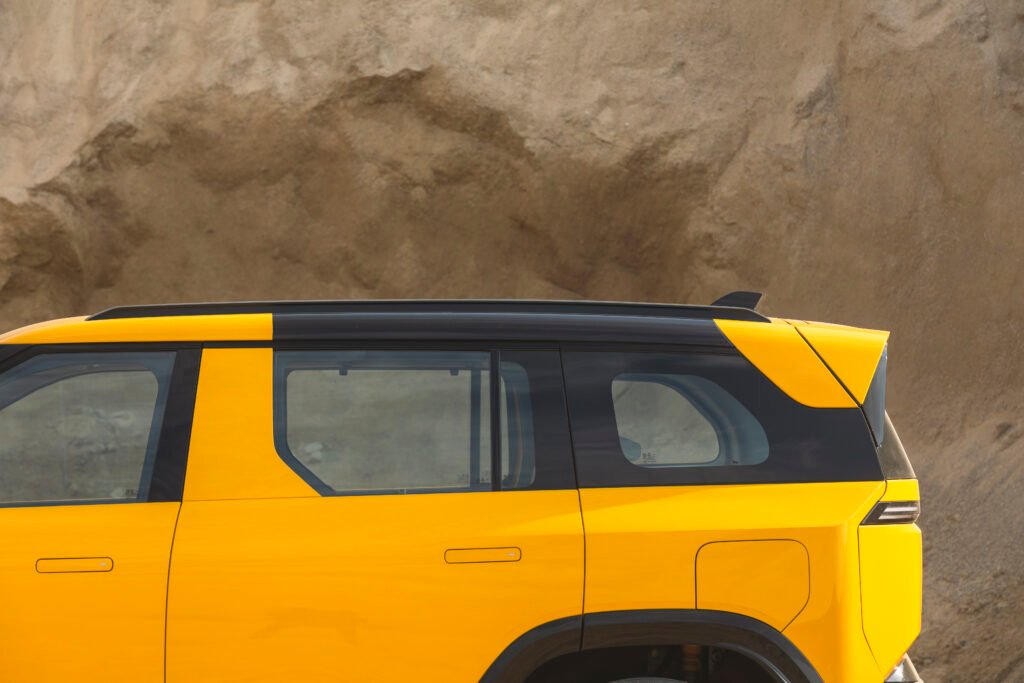
The most distinctive design decision on the Sierra is the blacked out C pillar treatment combined with the dark rear glass section. In a segment where every car tries to look wider, lower, and more aggressive, Tata chose to make the Sierra look taller and more architectural by visually separating the roofline from the body.
The black treatment makes the glasshouse feel like a separate element floating above the lower body, which is exactly what the original three door Sierra achieved through its unique form. On a five door modern SUV, recreating that visual character without replicating the layout is a genuinely clever piece of design thinking. It is what makes the Sierra identifiable from behind and from the side at a distance, which is the hardest thing to achieve in a segment this crowded
Interior & Cabin
Walking into the Sierra’s cabin is a genuinely different experience from any other car in this segment. Not because it feels flashy, but because it feels like someone spent a lot of time thinking about what a person actually does when they sit inside a car.
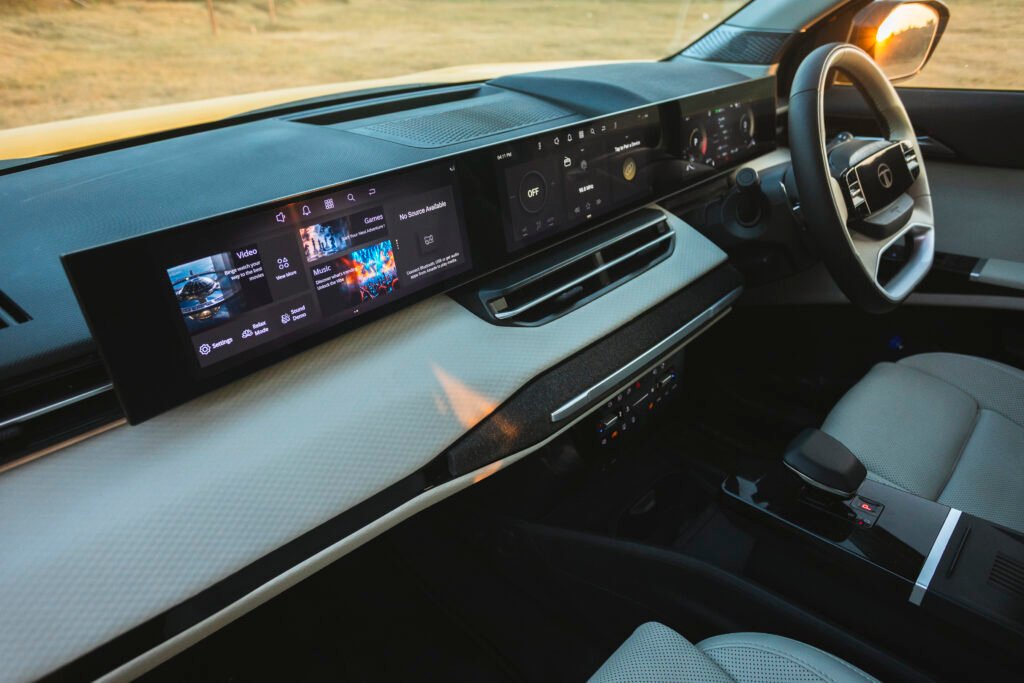
The most talked about element is the triple screen layout on the Accomplished variants. Two 12.3 inch Samsung OLED touchscreens sit side by side on the dashboard, with a 10.25 inch digital instrument cluster completing the arrangement. The OLED technology matters here. Better contrast, deeper blacks, and a visual quality that stands noticeably apart from the LCD screens most rivals use at this price. The passenger screen functions as an entertainment and navigation display, and Tata provides dedicated JBL headphones so rear passengers are not subjected to the passenger’s media choices. That level of consideration is unusual at this price point.
Below the screens, a dashboard mounted soundbar runs across the full width of the cabin. The 12 speaker JBL Black system with subwoofer and Dolby Atmos support creates a listening experience that genuinely transforms the cabin into something closer to a dedicated audio space. Thirteen sound modes are available, and the difference between them is actually audible, not just cosmetically present.
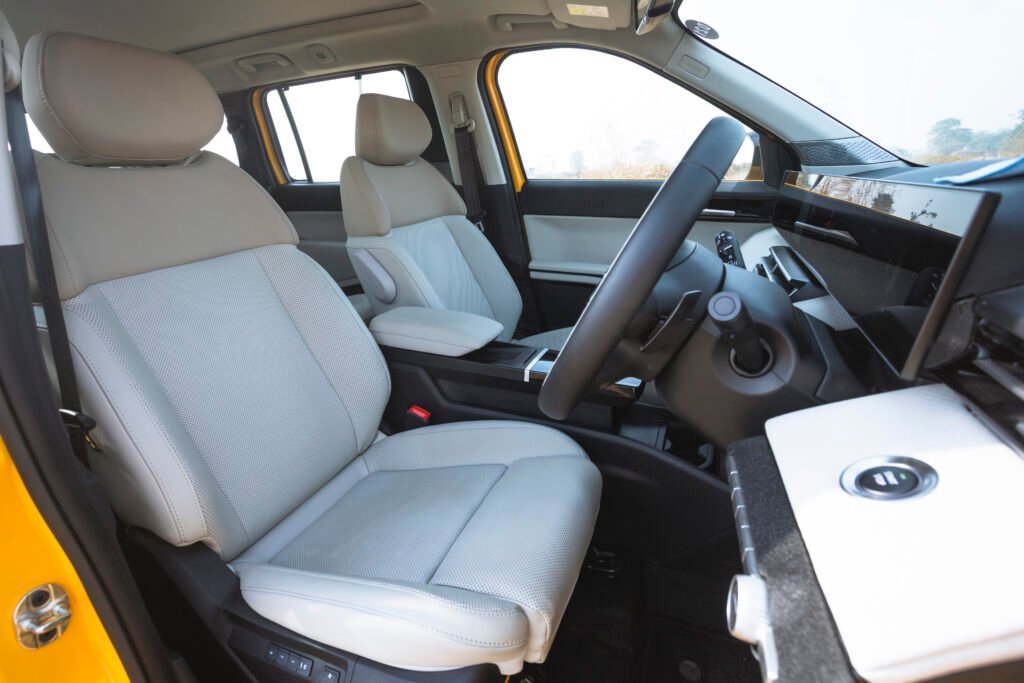
The 6 way powered driver seat with memory function and welcome mode slides back automatically when you open the door, creating a wide, easy entry. The ventilated seats cool down quickly and the seat comfort on long drives is excellent. Under thigh support is adjustable, which is a thoughtful addition that makes a real difference over a four or five hour highway run.
ORVM controls are illuminated, the IRVM is auto dimming, and the dual zone fully automatic climate control manages both rows independently. The BreatheIQ air purifier with real time AQI display is a feature that has become increasingly relevant in Indian urban conditions.
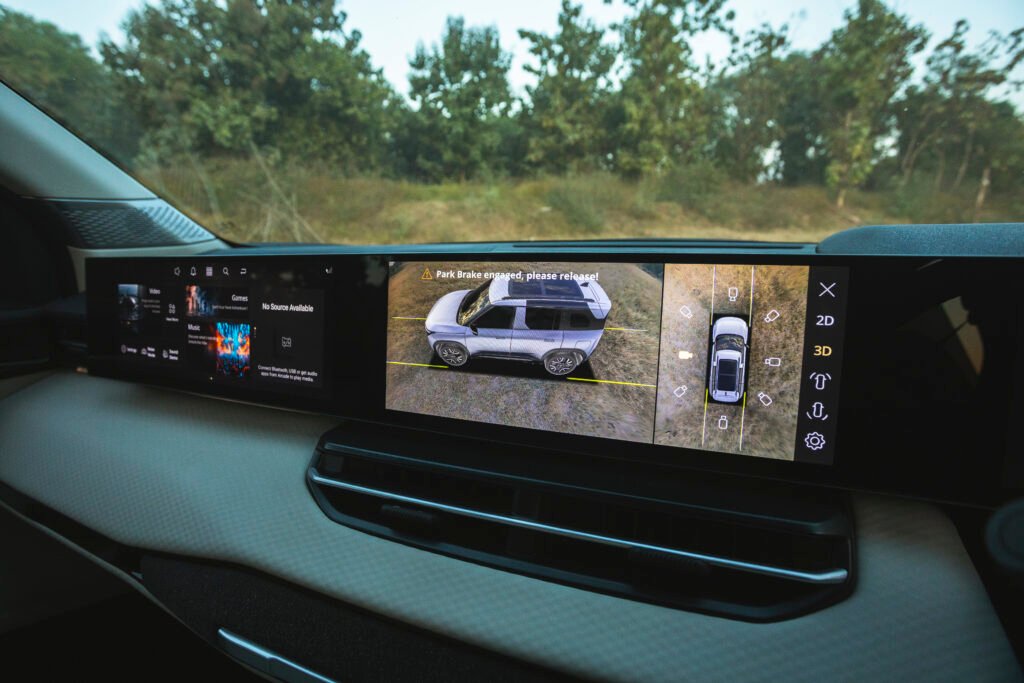
The 360 degree HD surround view system with the 4Sight blind spot technology is among the clearest and most useful implementations of this feature in the segment. The 3D view gives spatial depth rather than just a flat birds eye picture, which meaningfully helps with judging distances during parking.
The welcome function, the illuminated controls, the thoughtful storage organisation, and the quality of materials at every touch point all add up to a cabin that feels like it was designed from the inside out rather than styled from the outside in.
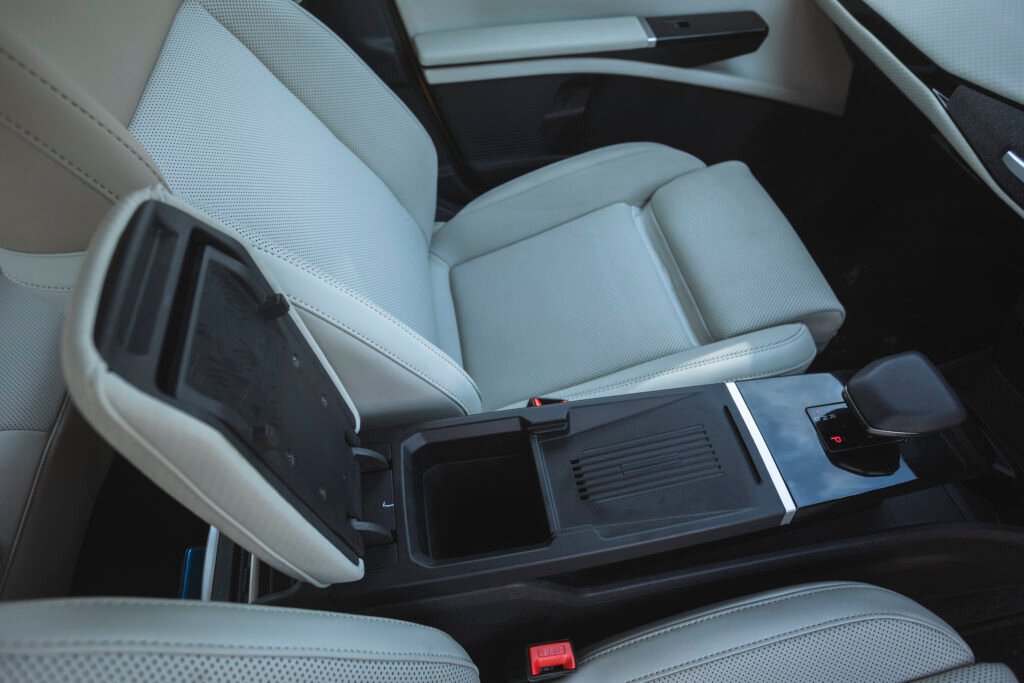
One honest note: the white interior in the top spec trim is beautiful but will require regular attention. High gloss black panels inside the cabin will attract fingerprints in daily use.
Rear Seat
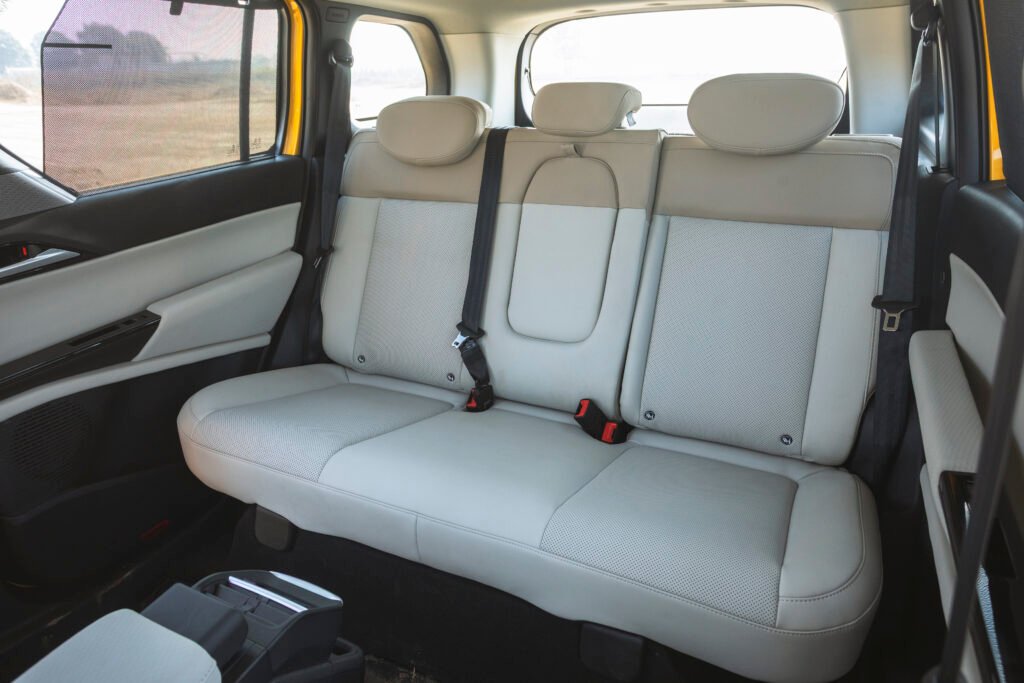
The rear seat experience in the Sierra is strong, though it comes with one limitation worth naming clearly.
Legroom and headroom are both generous. The 2,730 mm wheelbase gives the rear bench real room, and even with the large panoramic sunroof running overhead, headroom does not feel compromised. The recline function works in two stages, which is enough to make a difference on longer journeys without feeling like a full recliner.
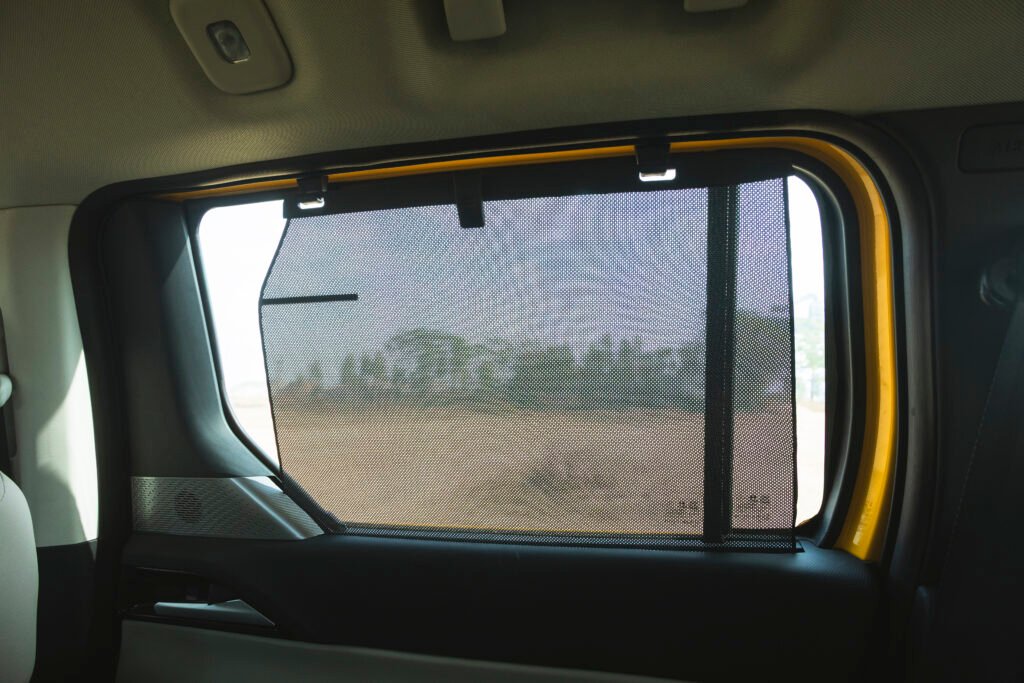
Window sunshades are present on rear windows, which matters on Indian summer afternoons. Dedicated AC vents with their own controls keep the rear cool independently of the front. The 60:40 split fold adds flexibility for boot space management.
The boss mode feature, which allows rear passengers to electrically adjust the front passenger seat position, is a genuinely premium touch. It gives the car a business class quality that most cars in this segment do not attempt.
However, the rear seat does not slide. In a segment where the Syros has set a new benchmark with its sliding rear bench, this is a gap the Sierra cannot ignore on a spec sheet comparison. For a car so focused on the rear cabin experience, this feels like an opportunity missed.
Boot space is 450 litres with seats up, expandable to 1,257 litres with the rear seats folded. The 450 litre figure itself is healthy for the segment, and the boot is wide, deep, and practically shaped.
Features That Actually Matter
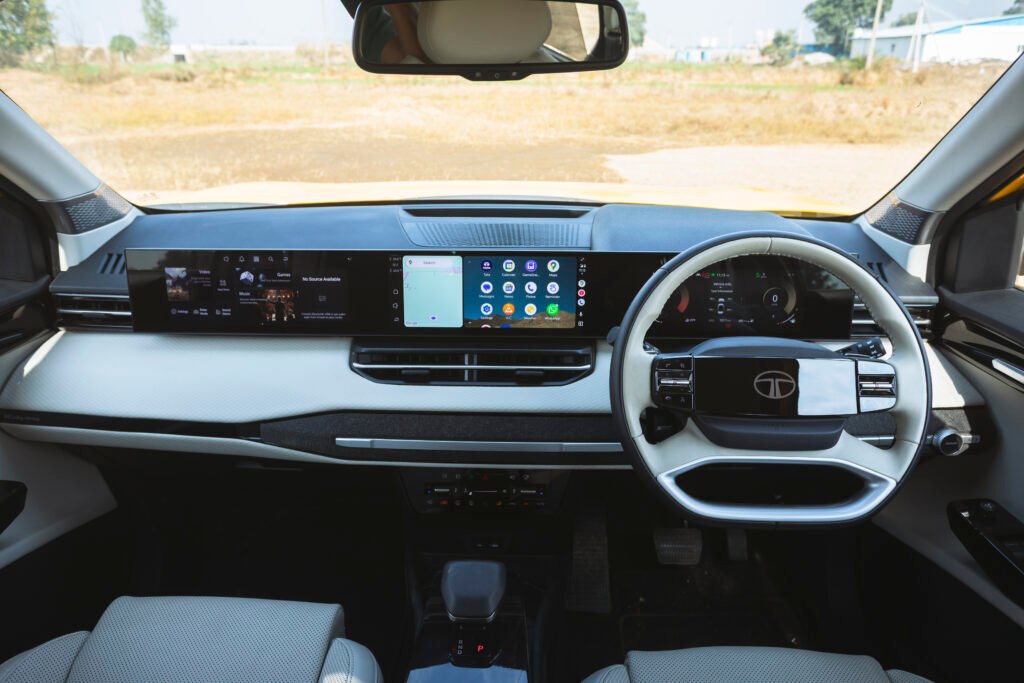
The triple screen layout is the most discussed feature, but the passenger screen with dedicated JBL headphones is the more interesting detail. It acknowledges that two people in the front of a car rarely want to consume the same content, and it solves that problem in a clean and considered way. No aftermarket tablet mount, no sharing one screen uncomfortably. The passenger has their own display and their own audio experience, without disturbing the driver.
The augmented reality heads up display offering 19 visual overlays is India’s first on a homegrown ICE vehicle. Navigation directions, speed, ADAS alerts, and terrain information projected onto the windscreen at a readable focal distance genuinely reduces the need to look away from the road. For anyone who does significant highway driving, this changes the safety profile of daily use.
The electronic tailgate with gesture control and mid stop boot function are features that earn their place in real use. The mid stop is specifically useful when parked under a low ceiling like a basement parking lot, where a fully open tailgate would hit the roof.
The Level 2 ADAS suite with 22 features, including adaptive cruise control, automatic emergency braking, lane keep assist, and cross traffic alert, is among the more comprehensive in this price band. The Bharat NCAP 5 star rating earned in March 2026 validates the structural integrity of the platform that carries all of this.
Safety
The Tata Sierra received a 5 star Bharat NCAP rating in March 2026, applying to all cars manufactured from that month onward. This is a strong and important credential for a car in this price band, and it reflects well on the Argos platform that underpins the Sierra.
Standard safety across all variants includes 6 airbags, ABS with EBD, electronic stability control, traction control, hill hold assist, and ISOFIX child seat anchors. Higher variants add the full Level 2 ADAS suite, 360 degree surround view with blind spot monitoring, a tyre pressure monitoring system, and front parking sensors.
The Electronic Stability Program with 21 functions is among the most comprehensive in the segment and operates largely invisibly in daily driving, which is exactly how a good safety system should work.
Engine & Transmission
The 1.5 litre Hyperion turbo petrol produces 160 PS and 255 Nm of torque. It is available exclusively with the 6 speed Aisin sourced torque converter automatic, and there is no manual option for this engine.
The character of this powertrain is energetic and willing. It does not feel like a family comfort engine that happens to have a turbo bolted on. It feels like an engine that genuinely wants to be used. The 255 Nm arrives between 1,750 and 4,000 rpm, which means it is available in exactly the range where city overtaking and highway bursts actually happen. Zero to 100 kmph in approximately 10 seconds is a real world usable figure, not just a brochure number.
NVH levels are impressively low. The fabric fender lining and the overall sound deadening in the Sierra cabin mean engine noise stays outside where it belongs. Under acceleration you hear the engine working, but it is a refined, distant note rather than an intrusive one. At highway cruise, the cabin is genuinely quiet.
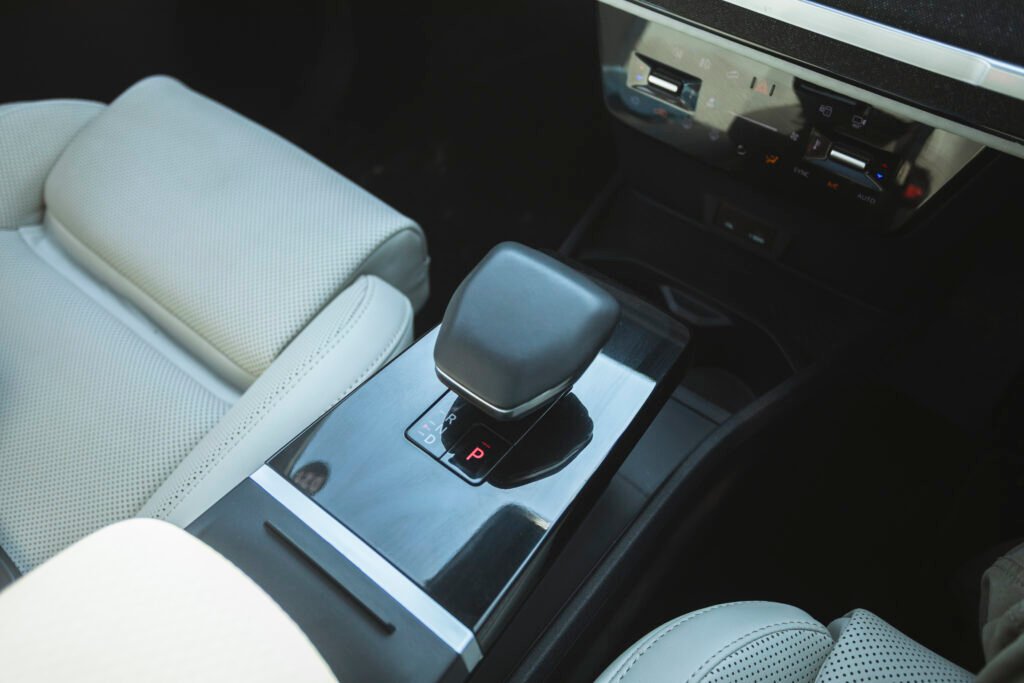
The Aisin torque converter automatic is smooth and well calibrated for this engine. It does not have the snap and immediacy of the 7 speed dual clutch automatic available with the naturally aspirated petrol, but it is more relaxed and more comfortable in city stop and go conditions. The monostable gear lever feels premium in hand. Paddle shifters are present for manual control when you want it.
Claimed fuel efficiency is around 16 to 17 kmpl. Real world figures from early ownership data suggest 11 to 13 kmpl in city conditions and 15 to 17 kmpl on highways. For a 160 PS turbo petrol driving a car of this size, those numbers are respectable.
Driving Dynamics & Braking
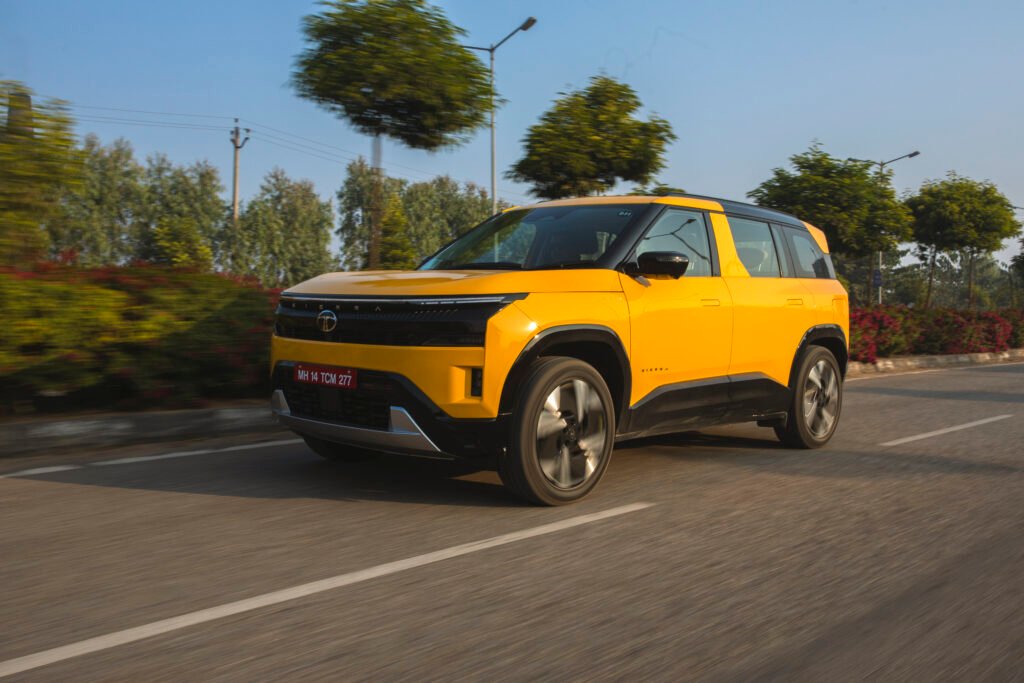
The Sierra turbo petrol automatic drives with a confidence and composure that is above average for this segment.
Steering is light at low speeds, which makes parking and city manoeuvring easy given the 4.3 metre footprint. At highway speeds it gains weight and feels more planted, with enough feedback through the wheel to feel secure during lane changes. It is not an engaging driver’s car in the way a hot hatch is, but it is precise and predictable in the way a well engineered family SUV should be.
Braking is strong. All wheel disc brakes are present across higher variants and the stopping power is consistent and reassuring. Pedal feel is progressive, not grabby, which builds confidence during repeated braking in city conditions.
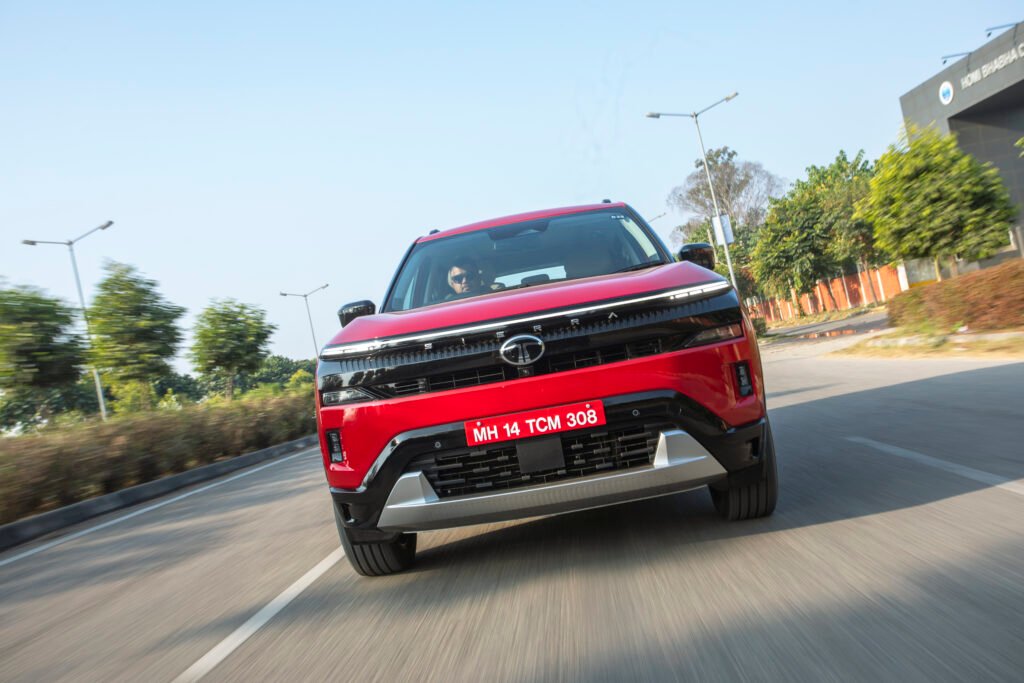
The ADAS suite intervenes cleanly without being nervous. Lane keep assist is gentle in its corrections, adaptive cruise control holds gaps without hunting, and the automatic emergency braking responds to genuine hazards without triggering on false positives. After a few hours of use, it becomes part of how you drive rather than something you notice.
Body roll is present but well controlled for a vehicle of this height and width. The Sierra stays composed through lane changes and corners that would unsettle a softer setup.
Ride & Handling
The suspension tuning on the Sierra sits on the firmer side, which is a deliberate choice and one that comes with clear tradeoffs.
On the positive side, the firmer setup gives the Sierra stability and body control that a softer suspension would sacrifice. At speed, the car feels planted. During lane changes, it responds without the floaty, unsettled quality that plagues softer compact SUVs. Higher variants benefit from frequency dependent damping, which adjusts shock absorber response based on road input frequency. In practice this means the suspension feels more comfortable on long wavelength undulations like highway surfaces while remaining controlled over shorter, sharper bumps.
On the negative side, sharp urban bumps and broken road patches are felt inside the cabin. Not harshly, but noticeably. The composure recovery is quick, so it does not feel like a continuous punishment, but buyers who specifically want a magic carpet ride should be aware of the tradeoff the Sierra makes here.
Steering feel, ride quality, and overall handling balance all improve as the road gets better, which means the Sierra rewards highway driving in particular.
Value for Money
The Smart Plus at Rs. 11.49 lakh is an interesting entry point but it lacks infotainment and most of the features that define the Sierra experience. It should be treated as a base specification for fleet and fleet adjacent buyers rather than a genuine recommendation for private buyers.
The Adventure Plus turbo petrol automatic at approximately Rs. 16.99 lakh is where the Sierra makes its most compelling argument. At this trim you get the turbo petrol, the automatic, a good portion of the feature set including the panoramic sunroof and ADAS, and the distinctive exterior presence, without paying for the full triple screen setup.
The Accomplished Plus at approximately Rs. 19.99 lakh is the complete Sierra experience. The triple screen layout, the JBL soundbar, the Dolby Atmos audio, the powered driver seat with memory, ventilated seats, the AR HUD, and the complete ADAS suite all come together in a single specification. At that price the Creta and Seltos are not really the comparison. The Sierra at Accomplished Plus is competing with a different class of buyer, one who wants a product with a genuine character of its own.
Pros & Cons
Pros
- 5 star Bharat NCAP rating earned in March 2026, one of the most important credentials in this segment right now
- Triple screen OLED layout is genuinely best in class at this price point
- Hyperion turbo petrol is energetic and enjoyable with strong mid range pull
- JBL soundbar with Dolby Atmos creates a genuinely immersive in cabin audio experience
- AR HUD is India’s first on a homegrown ICE vehicle and is practically useful, not just a novelty
- Largest panoramic sunroof in the segment transforms the cabin experience
- Boss mode for rear passengers adds a premium, business class quality to the rear cabin
- Six distinctive colour options with contrasting black roof make every shade feel considered
Cons
- Firmer suspension is felt on sharp urban bumps and broken colony roads
- Rear seat does not slide, a meaningful omission at this price and against this competition
- White interior on top spec will require consistent maintenance to stay clean
- No manual option for the turbo petrol, which rules it out for buyers who prefer that control
- High gloss black interior panels will attract fingerprints in daily use
Verdict
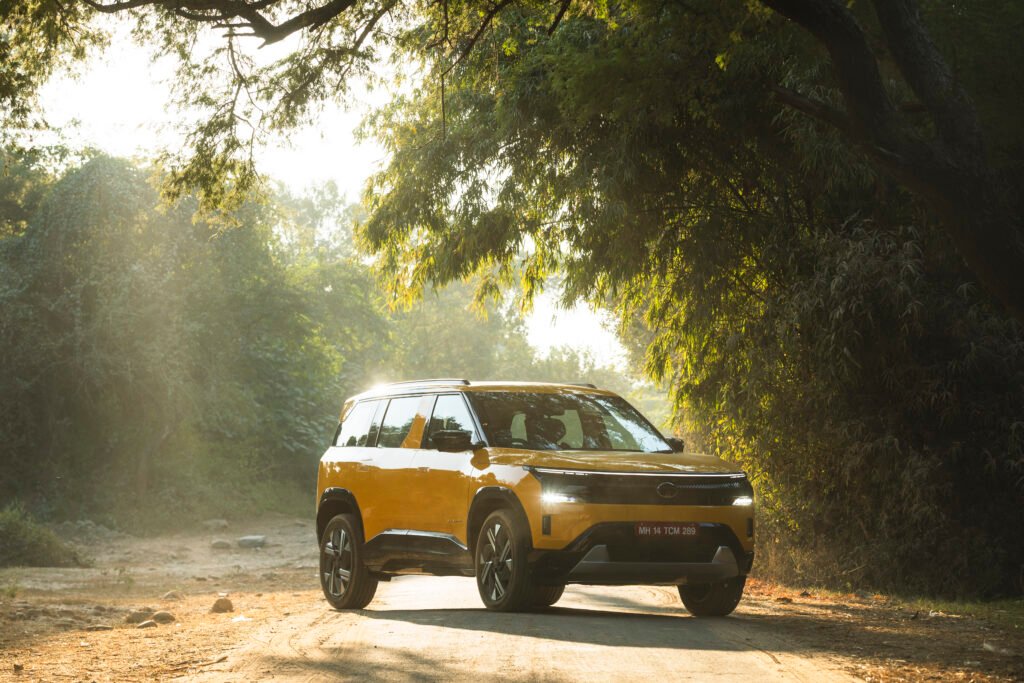
The Tata Sierra does not need the weight of its own history to justify its existence. It is good enough to stand on its own merits in 2026.
But the history helps. The original Sierra gave Tata a design identity at a time when Indian car brands were not expected to have one. The new Sierra does the same thing in a more complex market, against tougher competition, with significantly higher expectations. And it clears those expectations without feeling like it struggled.
The turbo petrol automatic is the version to drive if you want the most complete expression of the Sierra’s personality. The engine and the car’s character are aligned. This is not a diesel that prioritises efficiency above all. It is not a naturally aspirated petrol that prioritises simplicity. It is a turbo petrol that is willing, refined, and enjoyable, paired with a cabin that rewards the people who sit in it.
Buy the Adventure Plus if the budget matters and the driving experience is the priority. Buy the Accomplished Plus if you want everything the Sierra has to offer and are willing to pay for it without apology.
The Sierra is back. And this time, it does not feel like a revival. It feels like a beginning.
Review unit driven: Tata Sierra Hyperion 1.5 Turbo Petrol Automatic, Accomplished Plus | AutoMatta.in
